
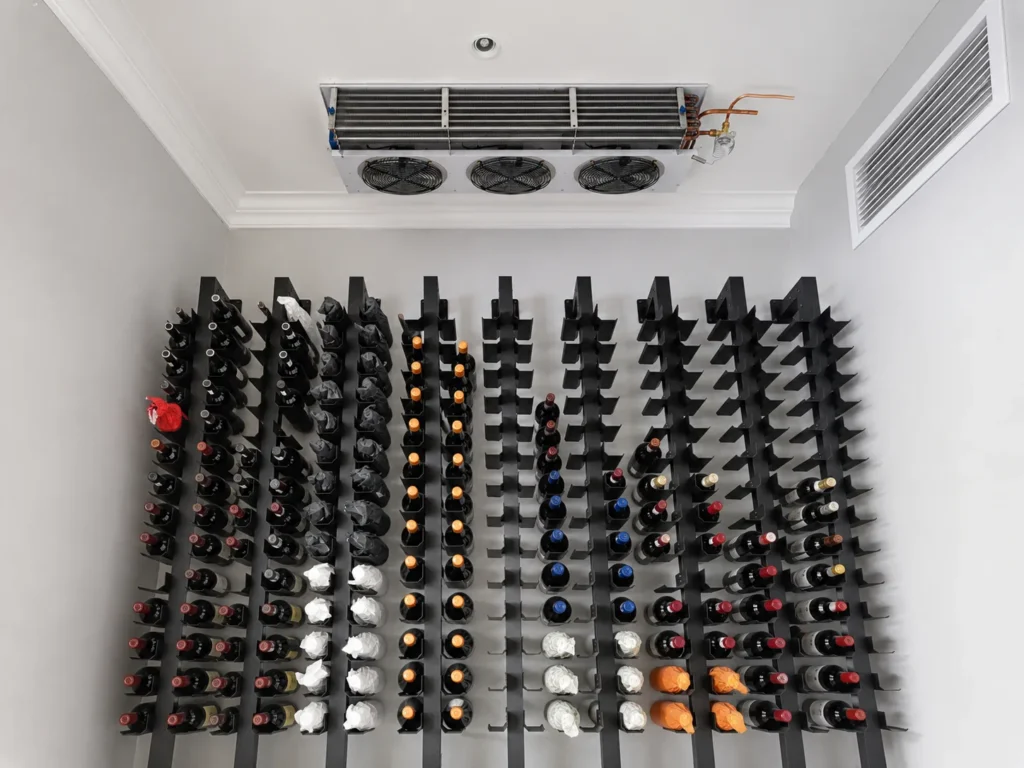
Storing wine correctly requires more than simply cooling a room. Wine needs a stable, carefully controlled environment where temperature remains consistent throughout the year. Excessive heat can accelerate ageing, while regular temperature fluctuations may affect flavour, aroma, cork condition, and the long term quality of the collection.
Standard air conditioning systems are designed to make occupied rooms comfortable. They are not normally engineered to maintain the lower and more consistent temperatures required for dedicated wine storage. This was the challenge faced by Patrick, a private client in Constantia, Cape Town.
Patrick had converted a dedicated room into a wine cellar and was using a conventional air conditioner to cool the space. Although the air conditioner operated, the room could not reach or consistently maintain the required storage temperature of 12°C.
Glotech Group was appointed to assess the existing arrangement and recommend a purpose designed wine cellar refrigeration solution.
The project involved disconnecting the unsuitable air conditioning system and installing a correctly selected refrigeration unit capable of maintaining stable wine storage conditions. Because the cellar already contained a valuable wine collection, the work also had to be completed without moving, shaking, or disturbing the bottles.
The complete installation was successfully delivered within three days in December 2024. Since commissioning, the wine cellar refrigeration system has continued operating reliably without any reported problems.
The client had previously relied on a standard air conditioning unit to cool the wine cellar.
Although this appeared to be a practical starting point, the air conditioner could not reduce the room temperature to the required 12°C or maintain sufficiently stable conditions.
This is a common problem in residential wine storage projects.
A conventional air conditioner is generally designed to cool an occupied room to a comfortable temperature. It is not normally selected for the continuous cooling load, control range, airflow requirements, and operating conditions of a dedicated wine cellar.
As a result, the existing system experienced several limitations.
The room could not achieve the required temperature.
Cooling performance varied according to ambient conditions.
The air conditioner was operating outside the application for which it had been designed.
Long term reliability could not be guaranteed.
The valuable wine collection remained exposed to conditions that were less controlled than the client required.
Continuing to use the air conditioner would not have addressed the underlying problem. A refrigeration system designed for wine storage was required.
Before recommending replacement equipment, Glotech Group assessed the room and the client’s storage requirements.
The assessment considered:
This assessment allowed the refrigeration system to be selected according to the actual room conditions rather than relying on a general cooling estimate.
Correct equipment selection is essential in any temperature-controlled room installation, because an undersized system may struggle while an oversized unit can create excessive cycling and unstable control.
Following the consultation, Glotech Group recommended removing the conventional air conditioning setup and installing a dedicated wine cellar refrigeration unit.
The new system was selected specifically to maintain the room at approximately 12°C under normal operating conditions.
Unlike the previous air conditioner, the refrigeration unit was chosen according to the storage application, room volume, expected heat load, and desired temperature.
The new system provides several important advantages.
It can achieve the required wine storage temperature.
It maintains more consistent conditions.
It operates within its intended refrigeration range.
It provides more dependable long term performance.
It reduces the risk created by excessive room temperatures.
It offers better protection for the client’s wine collection.
The objective was not simply to make the room feel cool. The objective was to create a controlled storage environment suitable for wine.
One of the most important requirements was completing the work without unnecessarily disturbing the bottles already stored inside the cellar.
Wine bottles, particularly those being stored for long term maturation, should be handled carefully. Unnecessary movement can disturb sediment in older wines and create inconvenience for collectors who have carefully organised their bottles.
The Glotech Group team planned the installation around the existing collection.
The technicians worked carefully within the available space.
The bottles were not removed from the cellar.
The wine racks were not unnecessarily disturbed.
The collection was protected from tools, dust, and installation materials.
Refrigeration pipework and equipment were installed without shaking or moving the bottles.
This careful approach allowed the project to be completed while preserving the organisation and condition of the client’s collection.
The first stage of the work involved safely disconnecting the existing air conditioner.
The system was isolated electrically before the refrigeration connections and related components were removed.
Removing the unsuitable equipment created the space required for the new wine cellar refrigeration installation and ensured that the final setup would operate as one integrated system.
The disconnection process was completed carefully to avoid damaging the room or affecting the wine stored nearby.
Once the previous system had been removed, Glotech Group installed the recommended wine cellar refrigeration equipment.
The work included:
Careful attention was given to the positioning of the refrigeration equipment and airflow inside the room.
Air distribution is important in a wine cellar because the system must cool the complete space rather than creating one cold area near the unit and warmer sections elsewhere.
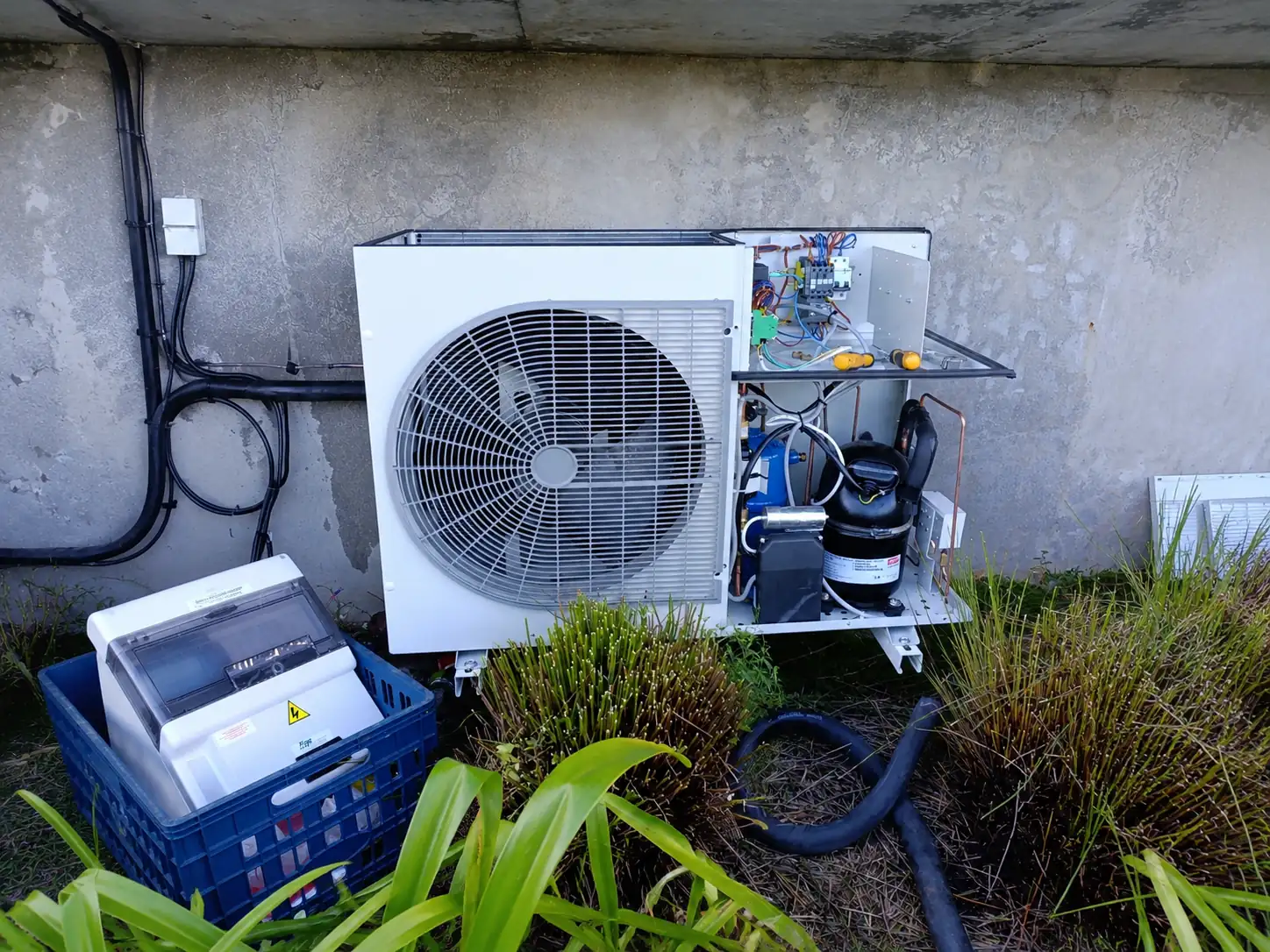
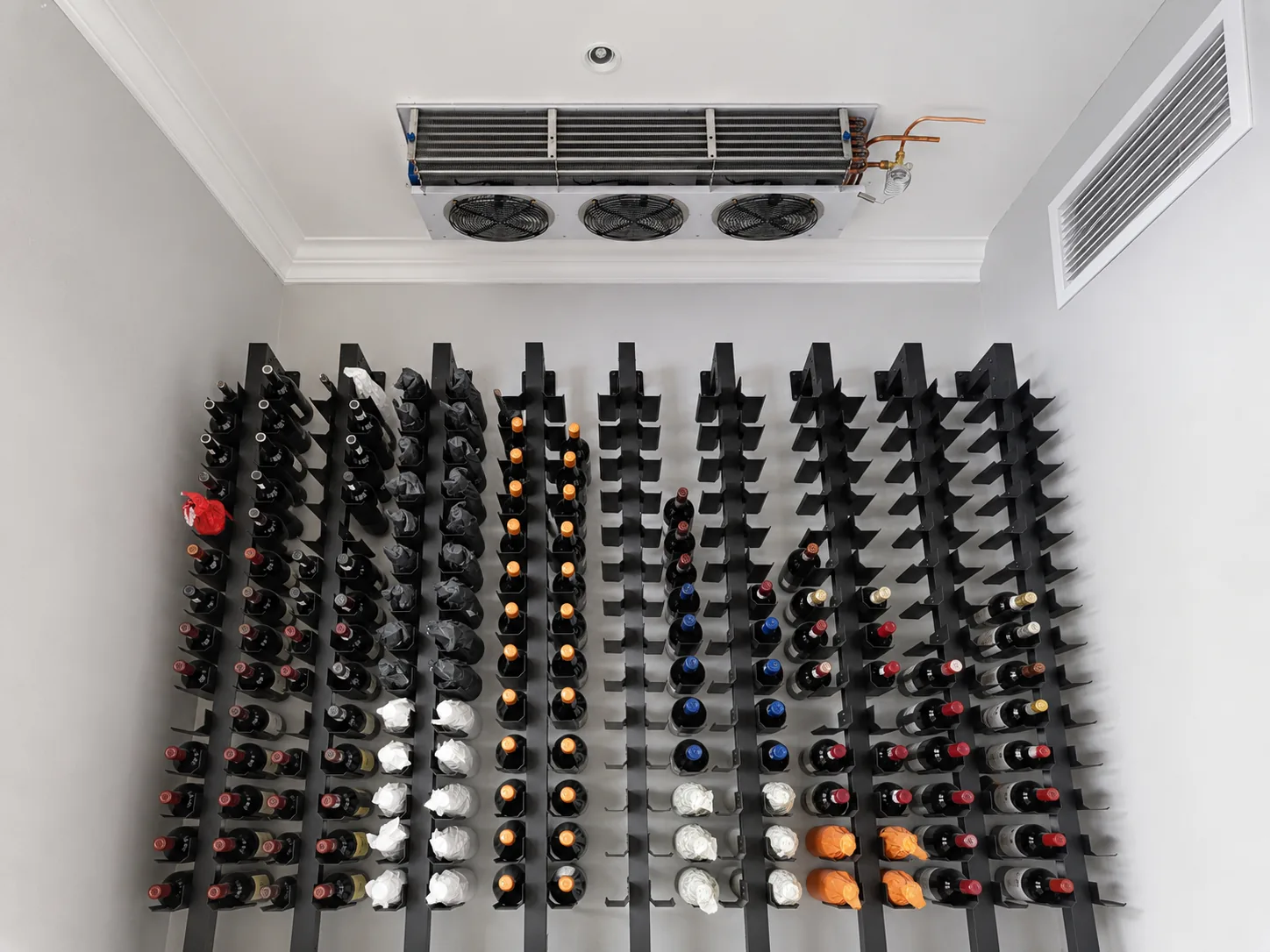
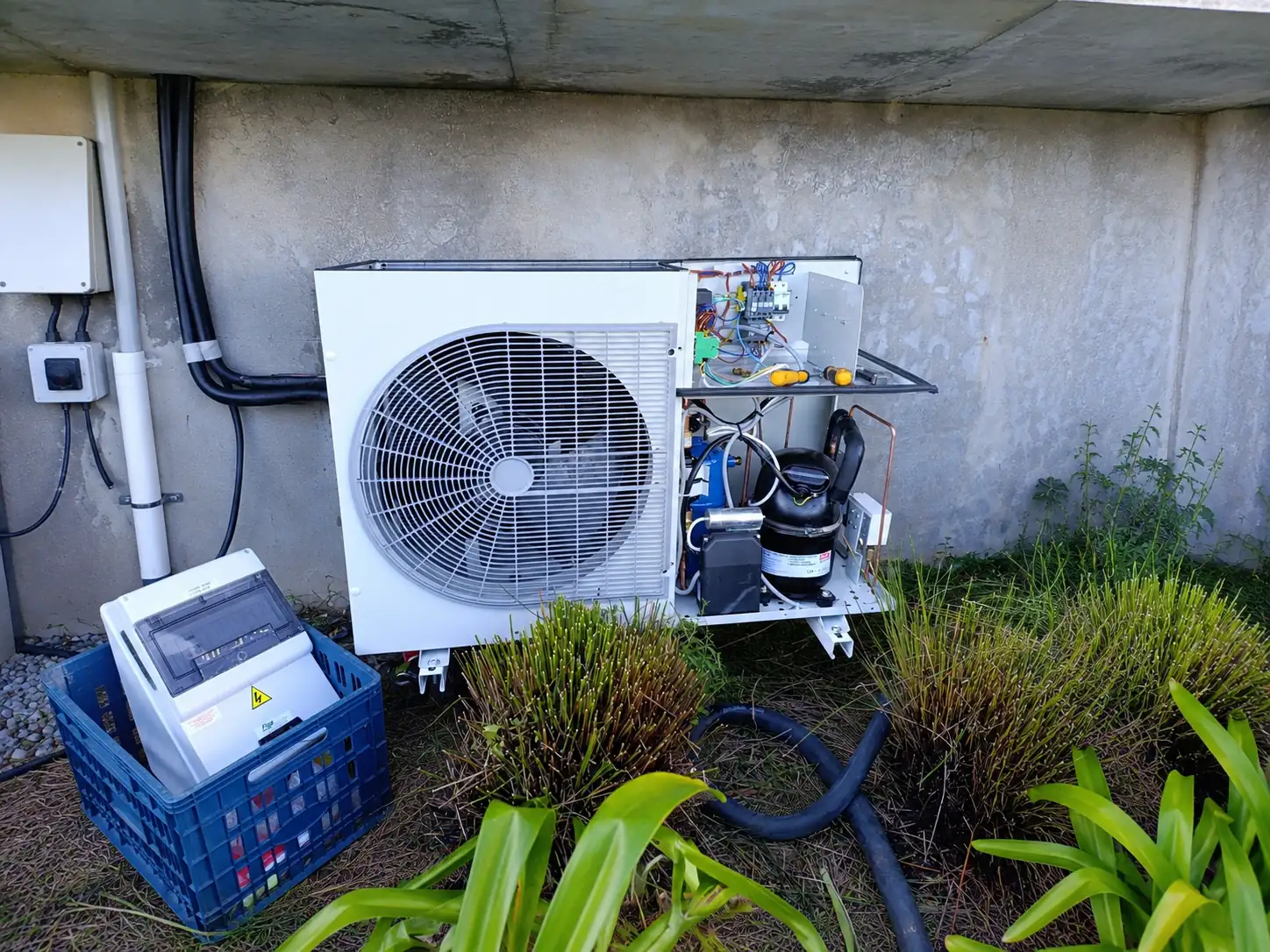
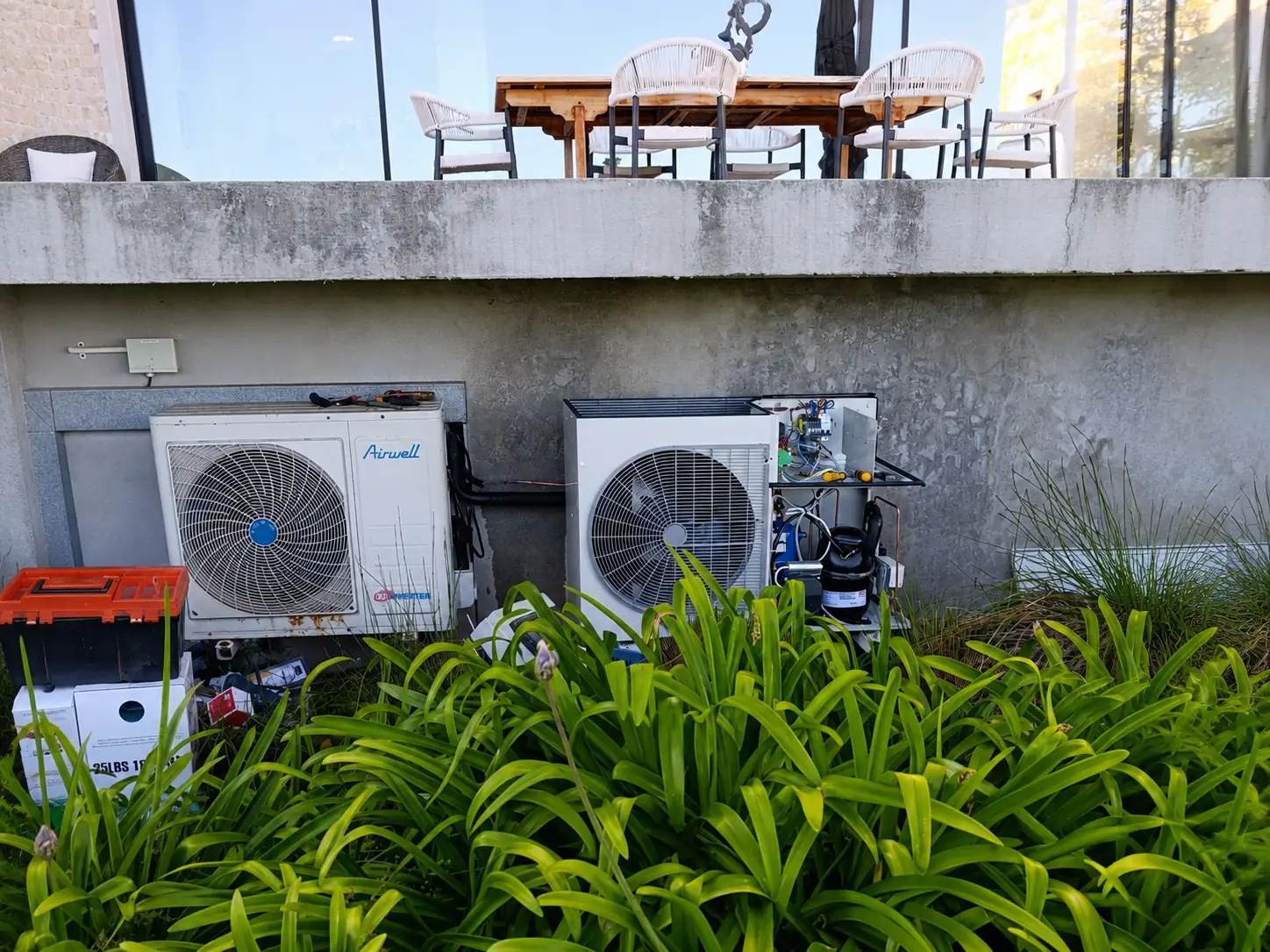
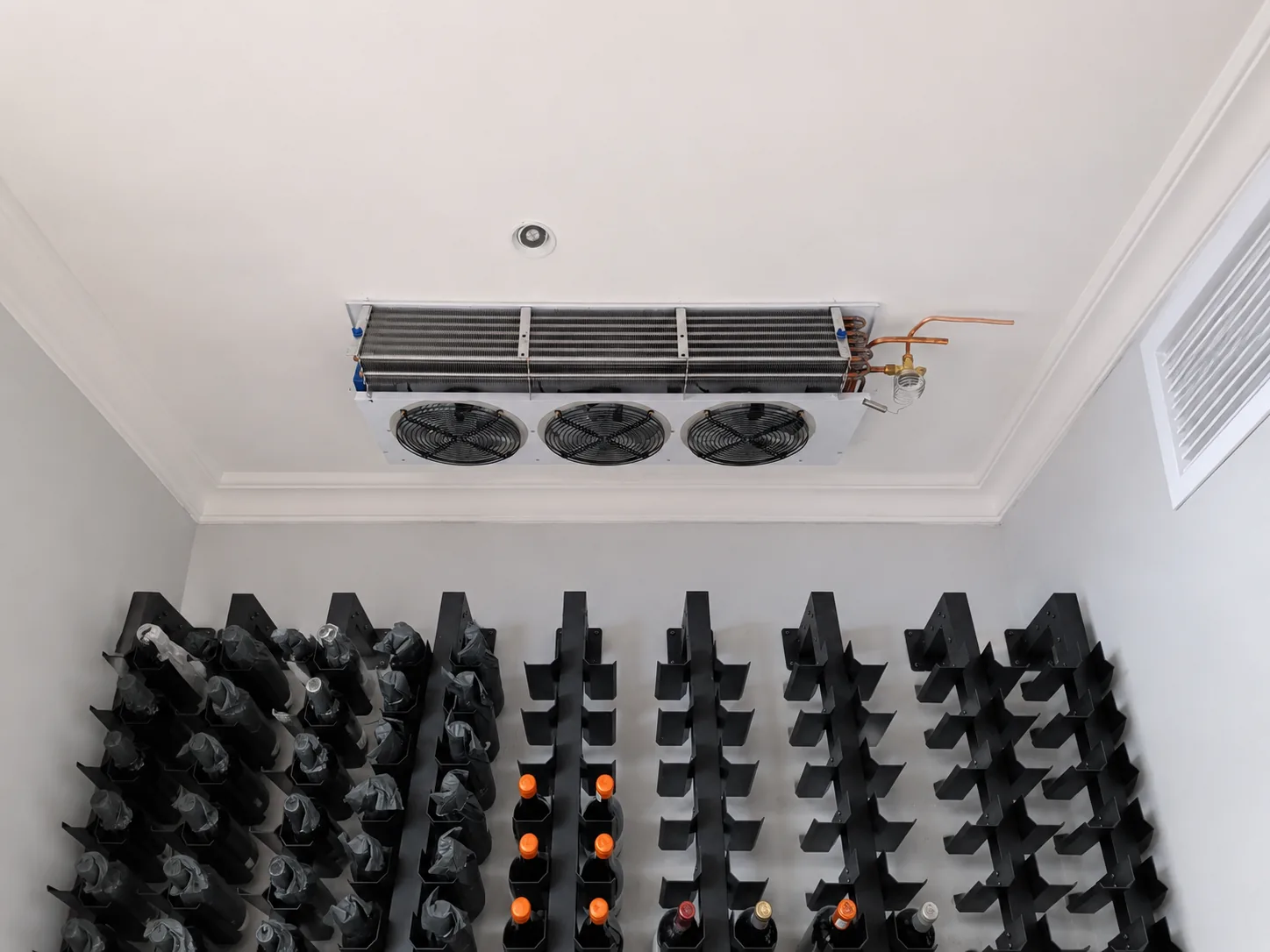
After the installation was completed, the system underwent full commissioning.
This stage was essential to confirm that the refrigeration unit could achieve and maintain the required temperature.
Testing included:
The temperature controller was calibrated to maintain the cellar at approximately 12°C.
Only after the refrigeration system had demonstrated reliable operation was the project handed over to the client
The complete project was delivered within three days.
This included removing the previous air conditioning installation, fitting the dedicated refrigeration equipment, completing pipework and electrical connections, testing the system, and calibrating the room temperature.
Despite working around an existing wine collection, the project was completed without unnecessary disruption.
The client was satisfied with both the installation process and the completed result.
The wine cellar refrigeration installation was completed in December 2024.
As of July 2026, the system has been operating for more than 18 months and is approaching two years of service.
During this period, no cooling problems or installation complaints have been reported.
The refrigeration unit continues to maintain the required conditions, demonstrating the value of correct equipment selection and professional installation.
The system’s ongoing performance confirms that the original problem was not the room itself. The primary issue was that the previous air conditioner was not suitable for the required application.
Once it was replaced with the correct refrigeration system, the room was able to achieve the desired storage conditions.
The completed installation provided Patrick with:
Wine is a sensitive product that continues developing inside the bottle.
Storage conditions can influence how well a wine matures over time. Excessive temperatures may accelerate chemical reactions, while repeated fluctuations can place additional stress on the bottle and closure.
A dedicated wine cellar refrigeration system helps create a more predictable environment.
The purpose is not to freeze or heavily chill the wine. It is to maintain a suitable and consistent temperature that supports long term storage.
For collectors, restaurants, wine estates, hotels, and private homeowners, the value of a temperature controlled cellar lies in protecting the wine rather than simply cooling the room.
Glotech Group has more than 15 years of experience delivering refrigeration installations, repairs, upgrades and commercial refrigeration maintenance services.
Our expertise extends beyond commercial cold rooms and freezer rooms to specialist temperature controlled applications such as:
Every refrigeration system is selected according to the product, room dimensions, target temperature, operating conditions, and long term performance requirements. Glotech Group also designs residential temperature-controlled spaces for other storage requirements, as demonstrated in our residential cold room installation in Durbanville.
The Constantia wine cellar project demonstrates why specialist refrigeration equipment should be selected for specialist storage applications.
The client’s air conditioner could cool the room to a degree, but it could not achieve the consistent 12°C conditions required for the wine collection.
Rather than continuing to operate an unsuitable system, Glotech Group removed the air conditioner and installed a properly selected wine cellar refrigeration unit.
The work was completed within three days without moving or disturbing the client’s bottles. More than 18 months later, the system continues operating reliably with no reported complaints.
The outcome is a professionally cooled residential wine cellar that protects the collection and provides the client with confidence that every bottle is stored under stable temperature conditions.
Explore more refrigeration installation case studies completed by Glotech Group for residential, hospitality, food-production and commercial clients.
Glotech Group designs, installs and commissions specialist wine-cellar cooling systems for private homes, restaurants, hotels and wine-storage facilities in Constantia, Cape Town and across the Western Cape.