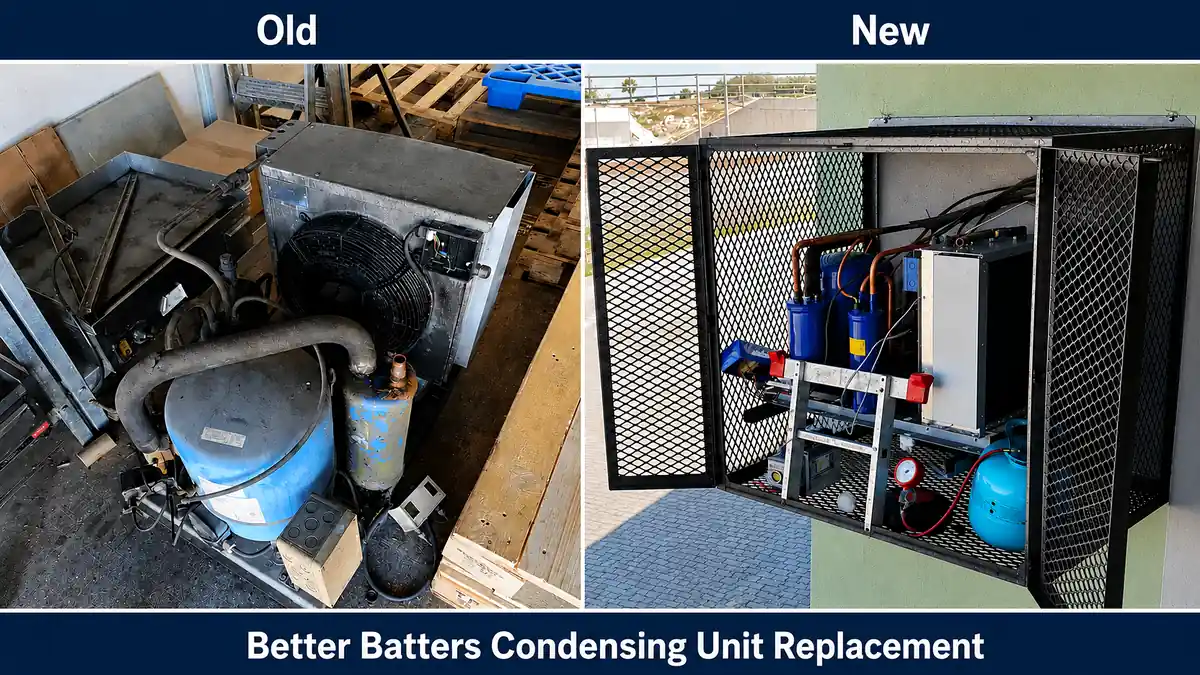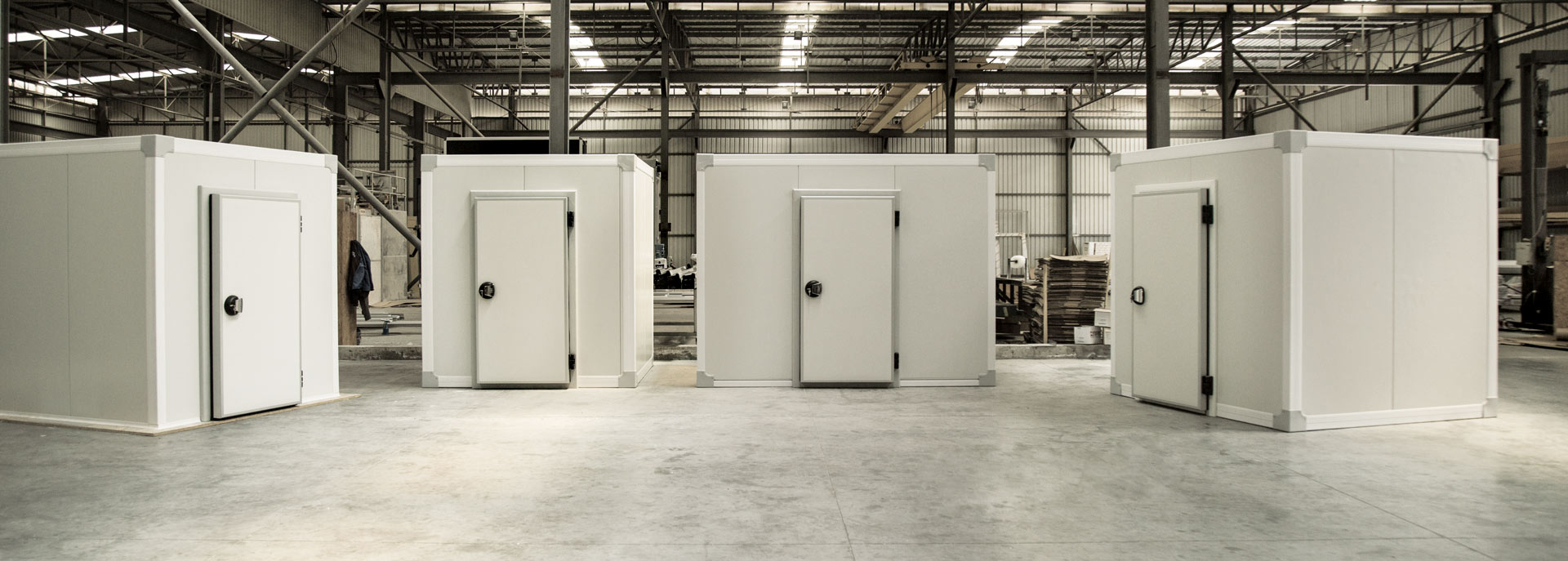
Cold rooms and freezer rooms are both insulated spaces fitted with commercial refrigeration equipment, but they are not interchangeable.
A cold room is generally designed to keep products chilled without freezing them. A freezer room operates below the freezing point and is normally used to preserve products that must remain frozen for extended periods.
This temperature difference affects almost every part of the room, including:
- Insulated panel thickness
- Floor construction
- Refrigeration capacity
- Evaporator design
- Defrost controls
- Door specification
- Vapour sealing
- Drainage
- Electrical demand
- Operating cost
A business should therefore choose between a cold room and freezer room according to the product’s required storage conditions—not simply according to which option has the lower installation price.
Cold Room vs Freezer Room: Quick Comparison
| Feature | Cold Room | Freezer Room |
|---|---|---|
| Main purpose | Chilled product storage | Frozen product storage |
| Typical room temperature | Commonly approximately 0°C to +10°C | Commonly approximately −18°C or below |
| Product condition | Chilled but normally unfrozen | Fully frozen |
| Typical products | Fresh produce, dairy, beverages, ingredients and selected fresh meats | Frozen meat, poultry, seafood, prepared foods, ice cream and frozen ingredients |
| Insulated panels | Commonly thinner, depending on the application | Greater insulation thickness is normally required |
| Flooring | Depends on temperature, slab and application | An insulated floor is normally required |
| Vapour control | Important | More demanding because of the greater temperature difference |
| Defrost requirements | Generally less severe | More demanding because moisture freezes on the evaporator |
| Door design | Insulated hinged or sliding door | Heavier freezer-grade insulated door and sealing may be required |
| Refrigeration load | Usually lower for an equivalent room | Usually higher for an equivalent room |
| Energy use | Generally lower under comparable conditions | Generally higher under comparable conditions |
| Product pull-down | Chills products toward storage temperature | Must remove sufficient heat to maintain or achieve frozen conditions |
| Risk from incorrect design | Poor temperature control and shortened shelf life | Ice formation, excessive running, floor damage and product thawing |
These temperature bands are broad planning ranges. The correct setpoint depends on the particular product, storage period, food-safety requirements and operating process.
What Is a Cold Room?
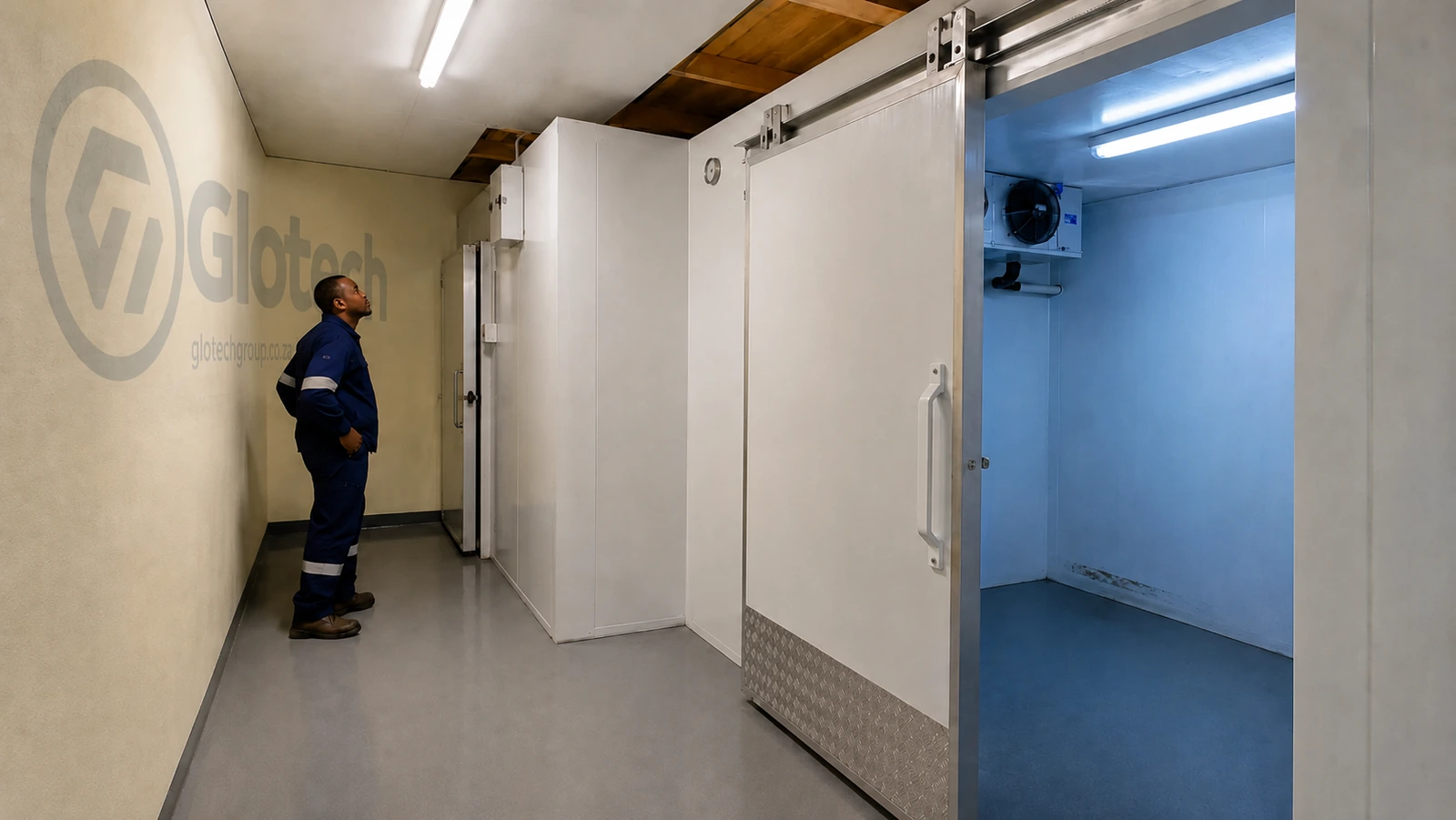
A cold room is an insulated refrigerated enclosure used to hold products at a controlled chilled temperature.
In everyday commercial use, the term often refers to a positive-temperature room operating above 0°C. However, some chilled food applications operate close to or slightly below 0°C without the product becoming fully frozen.
For example, FAO guidance lists recommended chilled storage conditions for several fresh meat products close to 0°C, with exact temperatures varying according to the product. This demonstrates why a universal cold room setpoint cannot be applied to every food category.
A cold room may be used for:
- Fresh fruit and vegetables
- Dairy products
- Bottled and canned beverages
- Fresh meat
- Prepared ingredients
- Flowers
- Wine
- Bakery ingredients
- Hospitality stock
- Temperature-sensitive commercial products
The purpose is normally to slow deterioration, control temperature and support a reliable cold chain without freezing the stored goods.
What Is a Freezer Room?
A freezer room is an insulated room designed to store products below their freezing point.
Commercial frozen-food rooms commonly operate at approximately −18°C or lower, although some products require colder conditions.
The correct freezer temperature depends on:
- Product type
- Required storage life
- Packaging
- Product quality requirements
- Frequency of access
- Whether the room is for storage or active freezing
- Relevant food-handling standards
A freezer room may store:
- Frozen meat
- Poultry
- Seafood
- Frozen vegetables
- Prepared meals
- Bakery products
- Ice cream
- Frozen desserts
- Frozen ingredients
- Packaged retail foods
A freezer room is primarily a storage environment. It should not automatically be treated as equipment for rapidly freezing large quantities of warm or unfrozen product.
The Main Difference: Chilling Versus Freezing
The simplest distinction is:
A cold room keeps products chilled, while a freezer room keeps products frozen.
Chilling reduces product temperature while generally keeping most of its water content unfrozen. Freezing removes substantially more heat and converts much of the product’s water into ice.
This difference affects:
- The amount of heat that must be removed
- The insulation needed to limit heat gain
- The rate at which moisture freezes on cold surfaces
- The required defrost system
- The risk of ice around doors and drains
- The floor design
- The amount of electricity consumed
- The time needed to bring products to the required temperature
A freezer room must maintain a much greater temperature difference between its interior and the surrounding building or outdoor environment.
For example, where the surrounding temperature is 30°C:
- A +5°C cold room has a 25°C temperature difference.
- A −18°C freezer room has a 48°C temperature difference.
The freezer-room envelope and refrigeration system must therefore resist substantially greater heat gain.
Cold Room Temperature Range
There is no single temperature suitable for all cold rooms.
A broad commercial cold room temperature range may extend from around 0°C to +10°C, but the correct setpoint should be based on the product rather than the name of the room.
Possible examples include:
| Application | Illustrative operating range |
| Fresh meat | Often close to 0°C |
| Dairy products | Commonly low positive temperatures |
| Prepared ingredients | Product-specific chilled conditions |
| Beverages | Moderate chilled temperatures |
| Fresh produce | Varies substantially by commodity |
| Wine | Selected stable storage temperature |
| Flowers | Variety-specific temperature and humidity |
Some fruit and vegetables can suffer chilling injury when stored at temperatures that are too low, while fresh meat generally requires tighter temperature control close to 0°C.
Humidity can also be as important as temperature. A room may technically reach its setpoint but still produce poor storage results where the humidity, airflow or packaging is unsuitable.
Freezer Room Temperature Range
A commercial freezer room is commonly designed to operate at approximately −18°C or below.
However, the room setpoint should not be chosen from a generic online recommendation alone. Different frozen products can require different temperatures and storage periods.
Certain frozen seafood applications, for example, may use temperatures substantially below −18°C to protect quality over longer storage periods. Research on frozen fish has found that lower storage temperatures can materially extend storage life, although the appropriate temperature remains product-specific.
The installer must know:
- Required room temperature
- Product temperature on arrival
- Maximum daily product load
- Required pull-down time
- Door-opening frequency
- Expected ambient temperature
- Required storage duration
These inputs determine whether the proposed freezer equipment can maintain the required conditions.
Walk-In Fridge vs Walk-In Freezer
The phrase walk-in fridge is commonly used for a positive-temperature cold room. A walk-in freezer is the negative-temperature equivalent.
Both are large enough for staff to enter, but their construction requirements differ.
A walk-in fridge commonly includes:
- Insulated walls and ceiling
- An insulated door
- A chilled-room evaporator
- A condensing unit
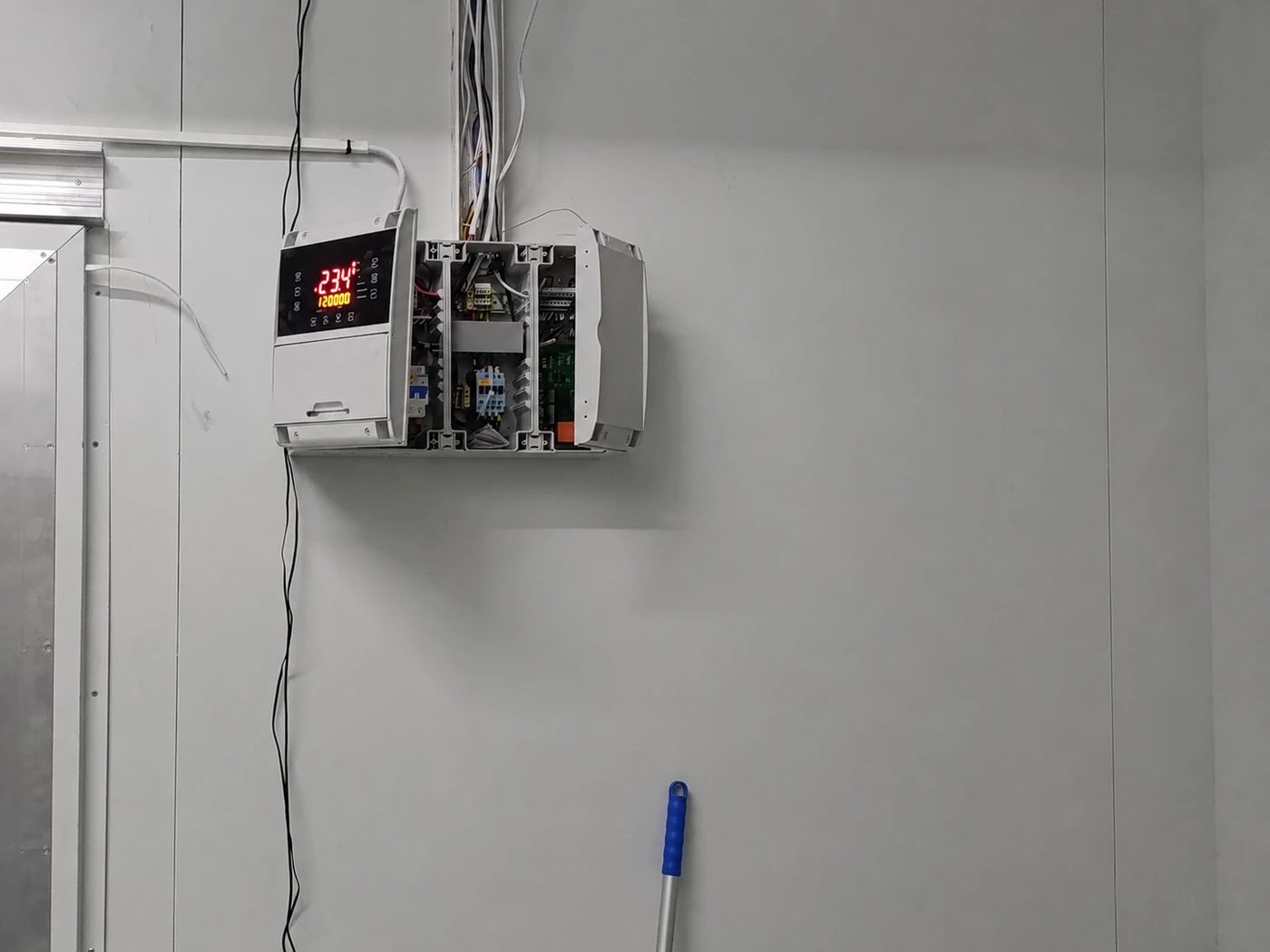
- Temperature controls
- Lighting
- Drainage
- Shelving or racking
A walk-in freezer needs these same basic components, but they must be selected for lower-temperature operation.
Additional freezer considerations can include:
- Thicker insulation
- Insulated flooring
- Stronger vapour sealing
- More robust door gaskets
- Pressure-relief provisions
- Door-frame heating
- Heated drain lines
- Electric or hot-gas defrost
- Underfloor frost protection in relevant applications
- Low-temperature controls and components
Converting a walk-in fridge into a freezer is therefore rarely as simple as adjusting the thermostat.
Difference in Insulated Panel Requirements
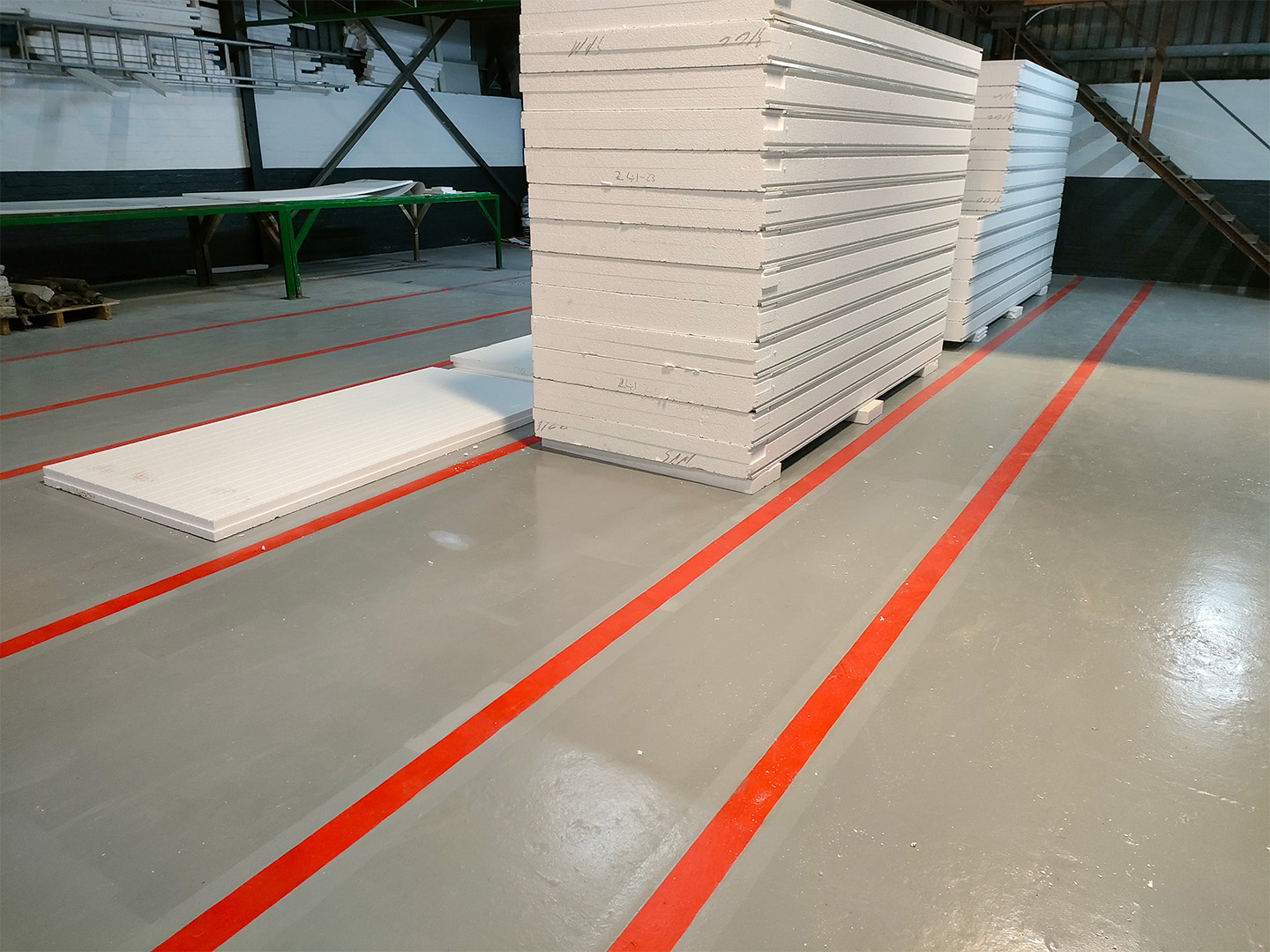
Insulated panels reduce heat entering the refrigerated room.
Cold rooms and freezer rooms may use similar panel construction systems, but freezers generally need stronger thermal resistance because of the greater temperature difference.
The correct panel specification depends on:
- Room temperature
- Ambient temperature
- Indoor or outdoor installation
- Panel core
- Insulation thickness
- Panel density
- Joint design
- Moisture resistance
- Fire-performance requirements
- Expected operating life
Typical panel cores include:
- Expanded polystyrene
- Polyurethane
- Polyisocyanurate
A freezer room commonly requires thicker panels than a cold room made from the same insulation material.
It is important, however, not to compare thickness alone. Different insulation cores provide different thermal resistance at the same thickness.
Panel joints also need careful attention. Warm, moisture-laden air can move through gaps in the enclosure. When that moisture reaches colder parts of the system, it can condense or freeze.
Poor sealing can cause:
- Ice around joints
- Wet insulation
- Loss of thermal performance
- Mould
- Corrosion
- Increased compressor operation
- Premature panel deterioration
The freezer room needs a continuous insulation and vapour-control envelope across its walls, ceiling, floor, door and service penetrations.
Difference in Floor Construction
Flooring is one of the most important differences between chilled and frozen rooms.
Cold room floors
A positive-temperature cold room may sometimes be installed over an existing suitable concrete floor.
The decision depends on:
- Required temperature
- Slab condition
- Hygiene requirements
- Moisture
- Drainage
- Structural loading
- Whether there is an occupied space below
- Expected trolley or pallet traffic
Some cold rooms still benefit from an insulated floor, particularly where energy efficiency, condensation control or thermal separation is important.
Freezer room floors
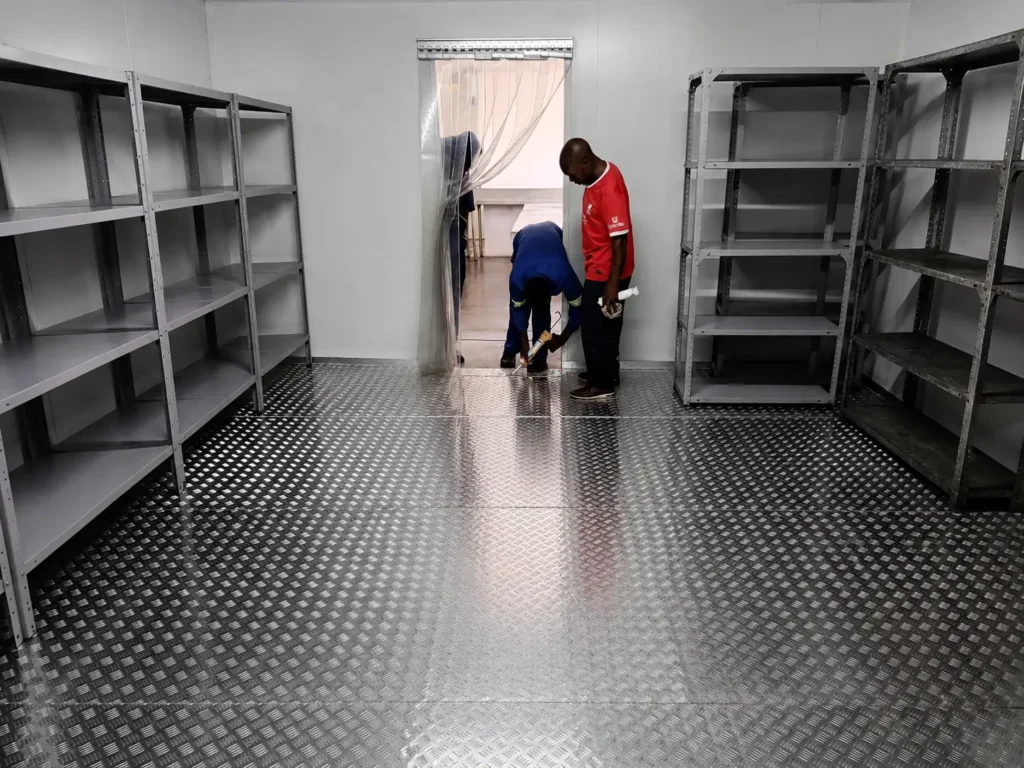
Freezer rooms normally require an insulated floor and a suitable vapour barrier.
Where a below-freezing room is built directly over the ground, heat can be continuously drawn from the soil below. Over time, moisture in the subsoil may freeze and expand.
This process is known as frost heave.
Frost heave can:
- Lift the floor slab
- Crack concrete
- Distort wall panels
- Damage door alignment
- Affect racking
- Damage refrigeration pipework
- Create unsafe floor levels
Refrigerated-facility design guidance distinguishes between rooms held above freezing, which may not require special underfloor treatment, and below-freezing facilities, which require more careful vapour and floor design.
Depending on the project, a freezer floor may include:
- Vapour barrier
- High-density floor insulation
- Reinforced structural slab
- Floor finish
- Underfloor ventilation
- Electric frost-protection heating
- Glycol heating system
- Perimeter thermal detailing
The exact design depends on the room size, operating temperature, ground conditions and building structure.
Difference in Refrigeration Equipment
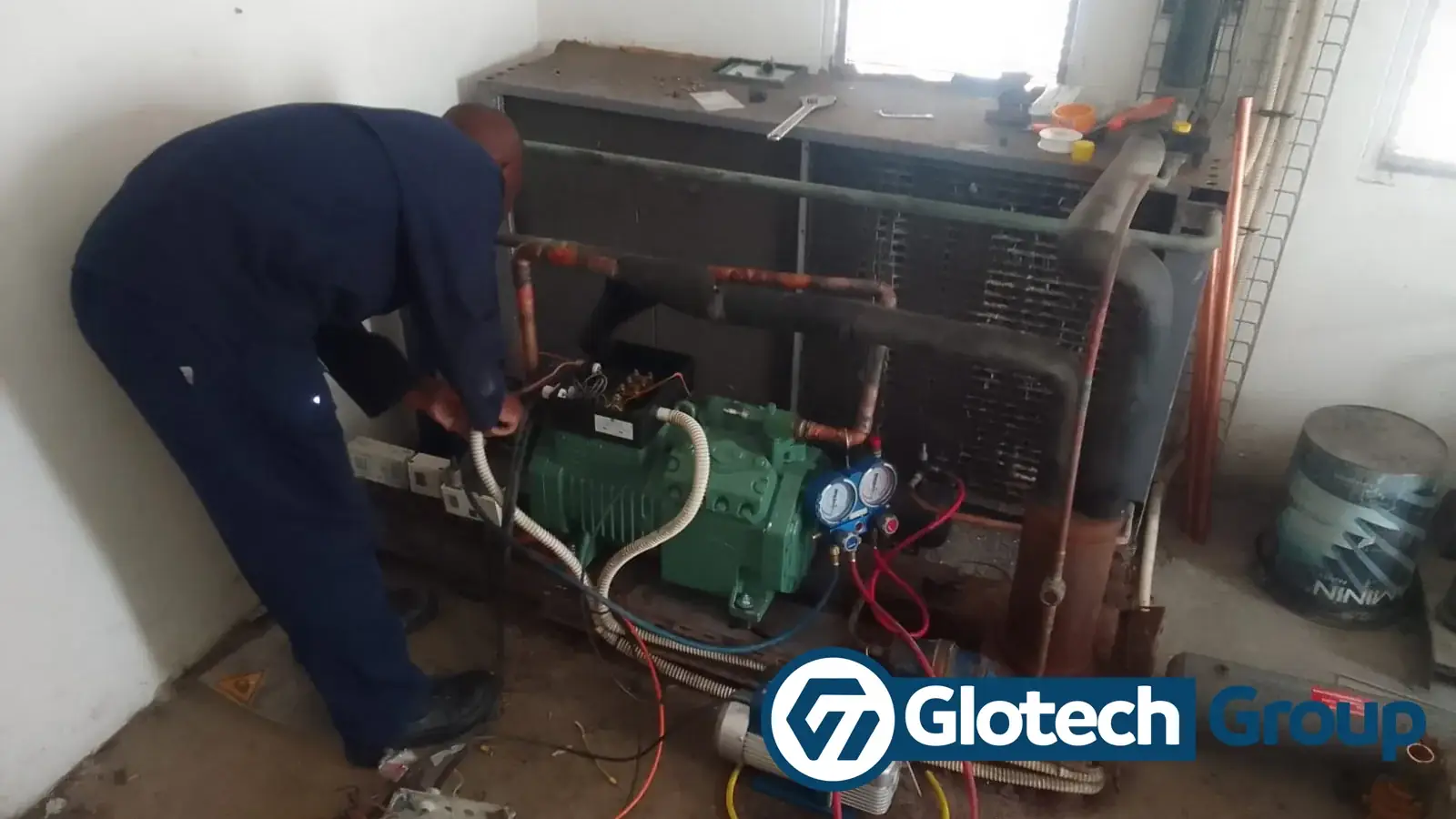
Cold rooms and freezer rooms both normally use an evaporator inside the room and a condensing unit outside it.
However, the equipment must be selected for different operating conditions.
Cold room refrigeration equipment
A positive-temperature system is designed for a higher evaporating temperature.
It commonly needs to remove:
- Heat entering through the enclosure
- Product heat
- Warm air entering through the door
- Heat from people
- Lighting heat
- Fan heat
- Heat from other internal equipment
Freezer room refrigeration equipment
A low-temperature system operates under more demanding conditions.
It may require:
- A low-temperature compressor
- A larger or differently selected evaporator
- Greater condenser capacity
- Low-temperature expansion controls
- More demanding defrost controls
- Crankcase heating
- Suitable oil-management arrangements
- Additional refrigerant controls
- Greater electrical capacity
- Low-temperature-rated components
The refrigeration unit cannot be selected from room dimensions alone.
Two rooms of the same size may require substantially different systems where one holds already-chilled drinks at +5°C and the other receives partially frozen food that must reach −18°C.
Difference in Refrigeration Capacity
A freezer room normally requires more refrigeration capacity than an equivalent cold room.
This is because the system must:
- Maintain a lower internal temperature
- Remove more heat from incoming products
- compensate for greater heat transfer
- Handle frozen moisture on the evaporator
- Recover after door openings
- Operate under lower suction conditions
The product temperature at loading is particularly important.
Consider two freezer-room applications:
Holding application
Products enter already frozen at approximately the required storage temperature. The system mainly maintains their condition.
Pull-down application
Products enter substantially warmer and must be cooled or frozen inside the room.
The second application creates a much larger product load.
A holding freezer designed only to maintain frozen stock may not have enough capacity to freeze large volumes of fresh or warm product within the required period.
Freezer Room vs Blast Freezer
A freezer room and blast freezer are not the same.
Freezer room
A freezer room is generally designed to store frozen products at a stable temperature.
Blast freezer
A blast freezer is designed to remove heat rapidly from products using:
- Lower air temperatures
- Higher air velocity
- Greater refrigeration capacity
- Controlled loading patterns
- Defined pull-down times
A conventional freezer room may eventually freeze some unfrozen products, but slow freezing can affect food texture, production time and room performance.
Businesses that must freeze large daily product loads should disclose:
- Product type
- Product weight
- Entry temperature
- Required core temperature
- Required freezing time
- Packaging
- Loading arrangement
This allows the contractor to determine whether a storage freezer or blast-freezing system is required.
Difference in Defrost Requirements
Moisture enters a refrigerated room whenever:
- The door opens
- Warm products are loaded
- Staff enter
- Air leaks through gaps
- Drains allow vapour movement
- The building envelope is poorly sealed
When this moisture reaches the cold evaporator coil, it condenses. In a freezer room, it rapidly freezes.
Ice accumulating on an evaporator restricts airflow and insulates the coil, reducing heat transfer.
Possible effects include:
- Rising room temperature
- Long compressor run times
- Reduced airflow
- Uneven product temperature
- Ice falling from the evaporator
- Fan damage
- Increased energy consumption
- Equipment failure
Cold room defrost
Some positive-temperature evaporators can defrost during compressor off-cycles because the room air is above freezing.
Other applications may still require active defrost depending on the coil temperature, humidity, loading pattern and controller settings.
Freezer room defrost
A freezer evaporator generally requires an active defrost method, such as:
- Electric defrost
- Hot-gas defrost
- Water defrost in selected industrial systems
The control system must manage:
- Defrost frequency
- Defrost duration
- Termination temperature
- Fan delay
- Drain heating
- Drip time
- Compressor operation
Too little defrost allows the coil to ice up. Excessive defrost introduces unnecessary heat into the room and increases electricity consumption.
The defrost schedule should therefore be based on actual operating conditions.
Door Differences
Every door opening allows warm air and moisture to enter the room.
This has a greater effect on a freezer because the incoming moisture can freeze on:
- Door frames
- Floors
- Evaporators
- Strip curtains
- Product packaging
- Ceilings
- Nearby panels
Cold room doors
A chilled room may use a suitable insulated hinged or sliding door with:
- Insulated leaf
- Gaskets
- Internal safety release
- Durable hinges or track
- Suitable hardware
Freezer room doors
A freezer door may require:
- Greater insulation thickness
- More robust gaskets
- Heated frame or threshold
- Pressure-relief valve
- Low-temperature-rated hardware
- Anti-condensation protection
- Improved sealing
When a freezer door is opened, warm air enters, cools and contracts. This can create a pressure difference that makes the door difficult to reopen.
A properly selected pressure-relief device can help equalise pressure without allowing uncontrolled air leakage.
Door Usage and Air Infiltration
The same freezer room can perform very differently depending on how it is used.
Factors include:
- Number of openings per hour
- Length of each opening
- Door dimensions
- Whether staff leave it open
- Trolley traffic
- Loading periods
- Exterior humidity
- Air movement outside the room
High-traffic facilities may require:
- Strip curtains
- Fast-closing doors
- Air curtains
- Loading procedures
- Door alarms
- Separate loading areas
- Ante-rooms
Reducing open-door time can improve temperature stability, reduce frost and lower system workload.
Drainage Differences
Evaporators produce water during defrost.
In a cold room, the drain line may remain above freezing, although it still needs correct fall, trapping and hygienic installation.
In a freezer room, water leaving the evaporator can refreeze before it exits the refrigerated space.
Freezer drain systems may therefore need:
- Drain-line heating
- Correct insulation
- Sufficient slope
- Short internal pipe runs
- Appropriate traps
- Proper termination outside the room
- Controls coordinated with defrost
A blocked or frozen drain can cause water to overflow and form dangerous ice on the freezer floor.
Vapour Barrier and Moisture Control
Moisture control is important in both room types, but the risk is greater in freezers.
Water vapour moves from the warm side of the room toward the colder side. Any gap in the vapour-control layer can allow moisture into the panel joints or insulation.
Possible consequences include:
- Condensation
- Internal ice formation
- Wet insulation
- Corrosion
- Increased heat transfer
- Panel delamination
- Mould outside the refrigerated area
- Structural deterioration
Penetrations for pipes, cables, drains and supports should be carefully sealed.
The vapour barrier must be continuous around:
- Walls
- Ceiling
- Floor
- Doors
- Corners
- Pipe penetrations
- Electrical penetrations
- Structural connections
Repairing hidden moisture damage after installation can be far more expensive than sealing the room correctly during construction.
Energy Consumption
A freezer room generally uses more electricity than an equivalent cold room because:
- It maintains a lower temperature.
- The compressor operates at a lower suction condition.
- Heat gain through the enclosure is greater.
- Defrost introduces heat.
- Door openings create more demanding recovery.
- Door and drain heaters may operate continuously or intermittently.
- Thicker ice formation increases system workload when maintenance is neglected.
Actual energy consumption depends on:
- Room dimensions
- Panel performance
- Ambient temperature
- Equipment efficiency
- Product load
- Door traffic
- Setpoint
- Defrost settings
- Condenser condition
- Refrigerant charge
- Maintenance quality
A small, heavily used freezer may consume more electricity than a larger cold room holding already-chilled products.
Product Applications
Products commonly stored in cold rooms
- Fresh fruit
- Vegetables
- Dairy products
- Fresh meat
- Chilled beverages
- Prepared ingredients
- Flowers
- Selected medicines
- Wine
- Chilled desserts
Products commonly stored in freezer rooms
- Frozen meat
- Frozen poultry
- Frozen seafood
- Ice cream
- Frozen vegetables
- Prepared frozen meals
- Frozen bakery products
- Ice
- Frozen ingredients
- Long-term frozen stock
These are general categories. The storage temperature must be confirmed for each product.
Can One Room Be Used as Both a Cold Room and Freezer?
A room should not routinely be switched between chilled and frozen operation unless it was specifically designed for both conditions.
Problems can arise because:
- The insulation may be unsuitable for freezer temperatures.
- The floor may not be insulated.
- The door may not be freezer rated.
- The evaporator may lack adequate defrost.
- The compressor may not be suitable for low-temperature operation.
- Drain lines may freeze.
- Controls may be incorrectly configured.
- Moisture may become trapped in panels.
- Stored products may require different temperatures.
A dual-temperature or split-room installation is often a better solution where the business needs both chilled and frozen storage.
Possible arrangements include:
- Separate cold and freezer rooms
- A divided enclosure with two independent refrigeration systems
- An ante-room leading into a freezer
- Modular rooms placed next to each other
The final design should prevent one room’s temperature, door traffic and defrost cycle from interfering with the other.
Can a Cold Room Be Converted Into a Freezer Room?
Conversion may be possible, but the complete room must be assessed.
The assessment should include:
- Wall and ceiling panel type
- Panel thickness
- Floor insulation
- Vapour barrier
- Door rating
- Door-frame heating
- Pressure relief
- Evaporator
- Condensing unit
- Compressor operating range
- Expansion device
- Defrost system
- Drain heating
- Electrical supply
- Pipework
- Controls
- Structural floor conditions
Simply replacing the refrigeration unit may leave the floor, panels, door and drainage unsuitable for freezer operation.
In some cases, rebuilding the room to the correct freezer specification is more reliable than attempting a partial conversion.
Which Room Does Your Business Need?
Choose a cold room where:
- Products must remain chilled but unfrozen.
- Stock is normally received pre-chilled.
- Required temperatures are generally above freezing.
- The application involves beverages, fresh produce, dairy or chilled ingredients.
- Frozen storage is not required.
Choose a freezer room where:
- Products must remain fully frozen.
- Storage is required at approximately −18°C or below.
- The business handles frozen meat, seafood, prepared foods or ice cream.
- Long-term frozen preservation is required.
- The enclosure, floor and refrigeration system can be designed for low-temperature operation.
Consider a blast freezer where:
- Warm or fresh products must be frozen rapidly.
- Production volumes are significant.
- A defined core temperature must be reached within a limited time.
- Product texture and freezing rate are important.
Questions to Answer Before Requesting a Quote
Provide the installer with:
- Products to be stored
- Required room temperature
- Product temperature on arrival
- Maximum stock quantity
- Daily quantity loaded
- Required pull-down time
- Room dimensions
- Indoor or outdoor location
- Expected door-opening frequency
- Available electrical supply
- Existing floor construction
- Required door dimensions
- Shelving or pallet arrangement
- Available condenser position
- Future capacity requirements
This information helps establish whether the business needs a chilled cold room, storage freezer or more specialised freezing system.
Common Selection Mistakes
Choosing according to price alone
A cheaper chilled room is not a substitute for a freezer where products must remain frozen.
Assuming all cold rooms operate at the same temperature
Fresh produce, meat, dairy, beverages and wine can require different conditions.
Using a freezer room to freeze warm products
A storage freezer may not have the capacity needed for rapid product freezing.
Ignoring the floor specification
A freezer installed over an unsuitable floor can create long-term structural and moisture problems.
Using cold-room panels for a freezer
Insufficient insulation increases heat gain and refrigeration workload.
Underestimating door traffic
Frequent openings can substantially increase moisture entry and system load.
Treating defrost as a minor control setting
Defrost design is essential to maintaining freezer evaporator airflow.
Blocking the evaporator with stock
Both cold and freezer rooms need unobstructed supply and return airflow.
Frequently Asked Questions
What is the main difference between a cold room and freezer room?
A cold room keeps products chilled, generally at positive temperatures, while a freezer room keeps products frozen, commonly at approximately −18°C or below.
Is a walk-in fridge the same as a cold room?
In common commercial use, a walk-in fridge normally refers to a positive-temperature cold room large enough for staff to enter.
Is a walk-in freezer the same as a freezer room?
Yes. Both terms generally describe an insulated, accessible room designed for frozen storage.
What is the normal cold room temperature range?
Many commercial cold rooms operate between approximately 0°C and +10°C, but the correct temperature depends on the product. Some chilled meat applications operate close to 0°C, while certain produce requires warmer conditions.
What temperature should a freezer room operate at?
Many frozen-food storage rooms operate at approximately −18°C or below. Certain products and longer storage periods may require lower temperatures.
Does a freezer room need thicker panels?
Usually, yes. A freezer must resist a greater temperature difference, so greater insulation thickness is normally required. The exact specification depends on the insulation core and design conditions.
Does a cold room need an insulated floor?
It depends on the operating temperature, slab, moisture conditions, hygiene requirements and the space below. Some positive-temperature rooms can use a suitable existing floor.
Does a freezer room need an insulated floor?
Normally, yes. Freezer floors require careful insulation and vapour-control design. Ground-bearing freezer rooms may also need frost-heave protection.
Why does a freezer need defrost?
Moisture entering the room freezes on the evaporator. Defrost removes this ice so that air can continue flowing through the coil.
Can a cold room refrigeration unit run a freezer?
Not necessarily. Low-temperature operation requires correctly selected compressors, evaporators, controls and defrost equipment. A cold-room system should not be converted by changing the thermostat alone.
Can I store chilled and frozen products in one room?
Not at the same time under one temperature setting. The products require different storage conditions. Separate rooms or a properly designed divided system are normally more suitable.
Is a freezer room more expensive to install?
It generally costs more than an equivalent cold room because it normally requires thicker insulation, an insulated floor, low-temperature refrigeration equipment, stronger moisture control and more demanding defrost arrangements.
Choose the Room According to the Product
The decision between a cold room and freezer room should begin with the required product temperature.
A positive-temperature cold room is normally suitable for chilled products such as fresh produce, dairy, beverages and ingredients. A freezer room is designed for frozen stock and requires a more demanding enclosure, floor, refrigeration system and defrost strategy.
Businesses should avoid selecting equipment based only on room dimensions or a general description such as “walk-in unit.” The contractor must understand the product, entry temperature, daily load, required storage temperature and operating pattern.
Glotech Group provides purpose-designed cold room installations in the Western Cape for chilled commercial storage applications.
For frozen products requiring low-temperature storage, visit: walk-in freezer installation .