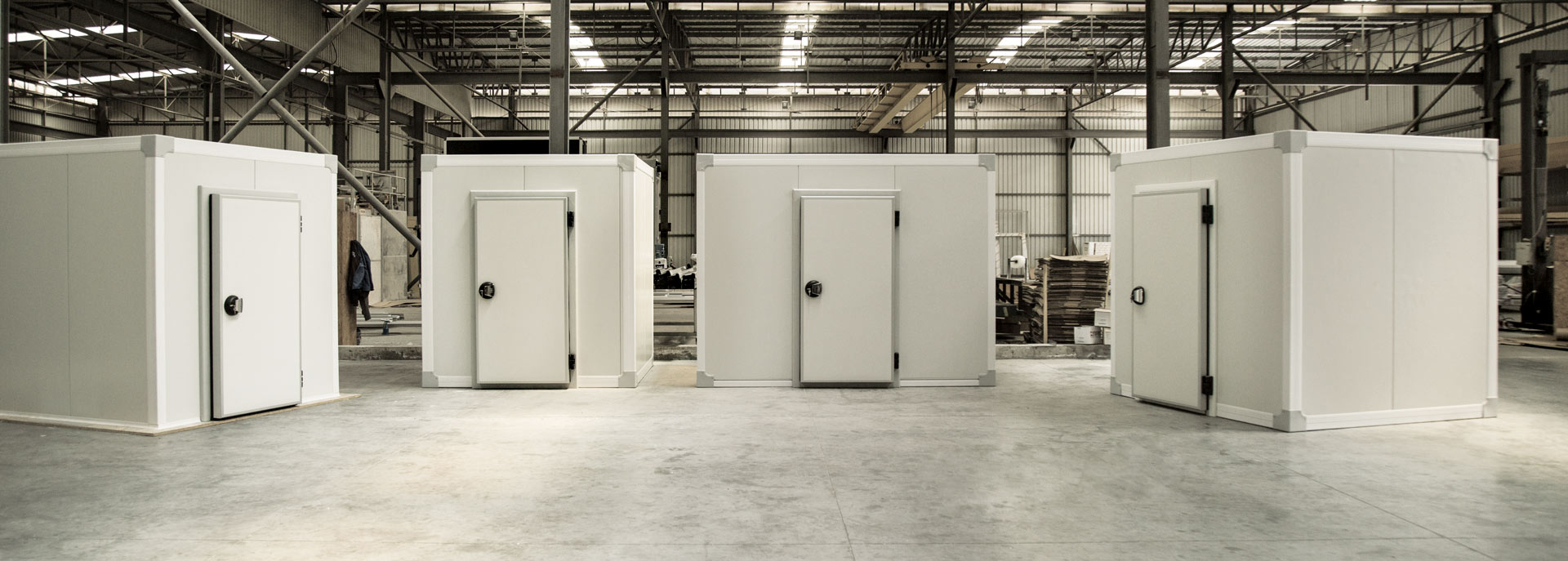
An ageing cold room does not always need to be replaced completely.
Many performance problems can be corrected by repairing a failed component, replacing the refrigeration system, refurbishing the insulated enclosure or upgrading the controls. Complete replacement is usually considered when several parts of the installation are deteriorating, the room no longer suits the business or continued repairs are becoming uneconomical.
The correct decision may be one of four options:
- Repair an individual component
- Upgrade the refrigeration system
- Refurbish the insulated room
- Replace the complete cold room
The decision should be based on the condition of the complete installation—not only the age of the compressor or panels.
Warning signs that require closer assessment include:
- Increasing electricity consumption
- Frequent refrigerant leaks
- Repeated compressor failures
- Rusted or damaged insulated panels
- Persistent condensation
- Ice around doors or panel joints
- Uneven room temperatures
- Obsolete refrigerant or unavailable components
- Repair costs approaching the value of replacement
This guide explains what each warning sign may mean and how to determine whether repair, refurbishment, an equipment upgrade or complete replacement is the most practical solution.
Cold Room Repair, Upgrade, Refurbishment or Replacement?
These terms are often used interchangeably, but they describe different levels of work.
Cold room repair
A repair addresses a specific fault while retaining most of the existing installation.
Examples include:
- Replacing a fan motor
- Repairing a refrigerant leak
- Replacing a controller
- Fitting new door gaskets
- Replacing a solenoid valve
- Repairing electrical wiring
- Replacing a failed pressure switch
- Clearing a drain
- Replacing a defrost heater
Repair is usually appropriate when the room and refrigeration equipment remain generally suitable and the fault is isolated.
Refrigeration-system upgrade
An upgrade replaces or improves major mechanical and electrical components while retaining the insulated room.
Examples include:
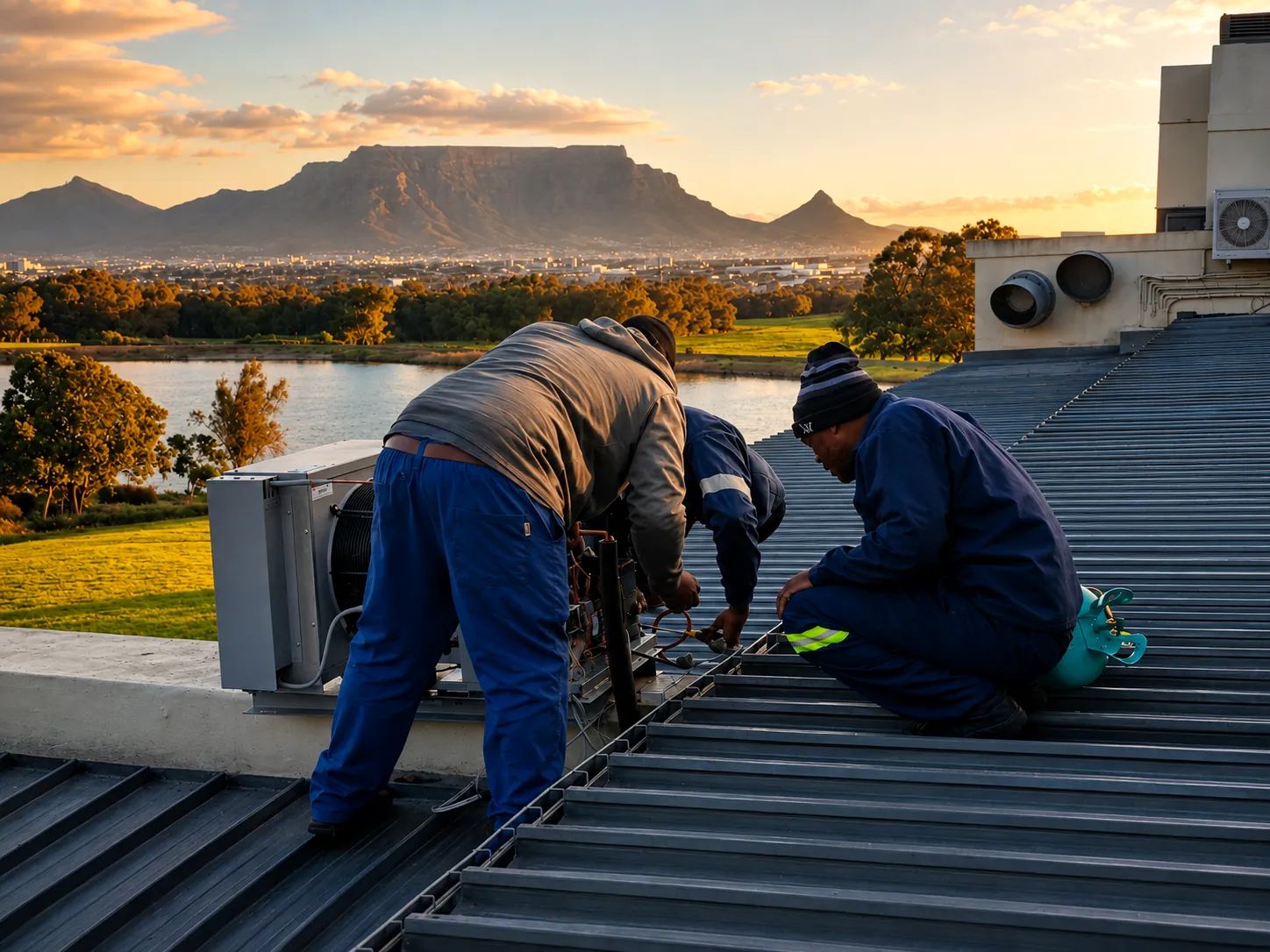
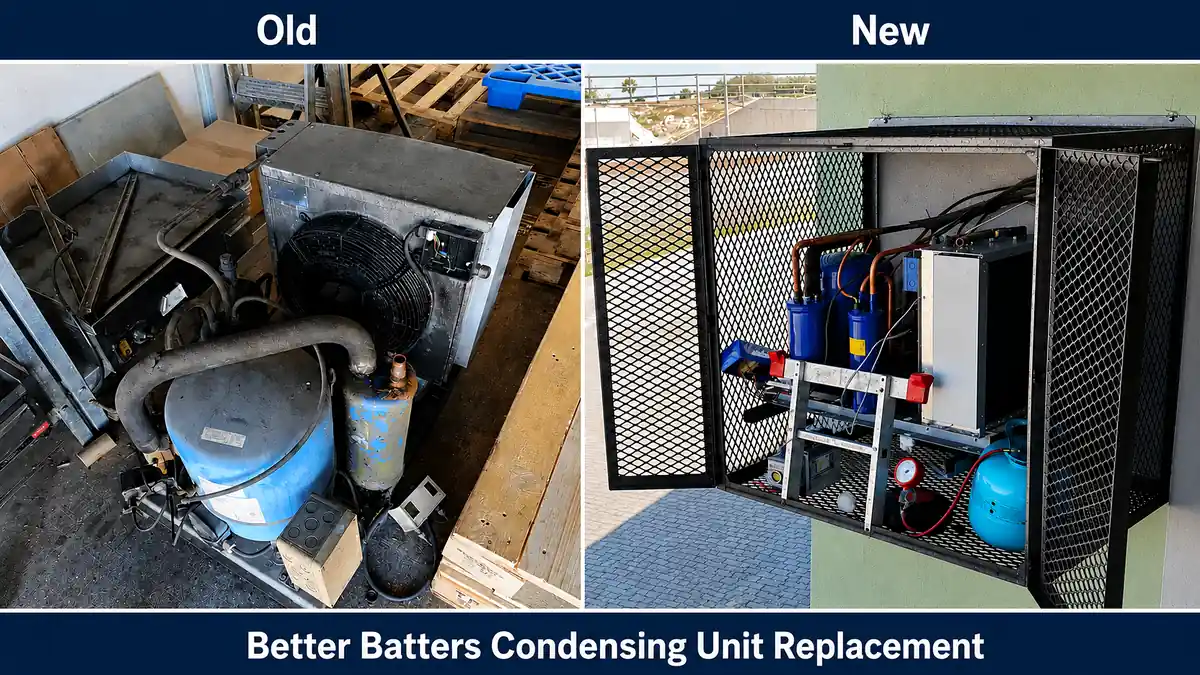
- Replacing the condensing unit
- Installing a new evaporator
- Replacing the compressor
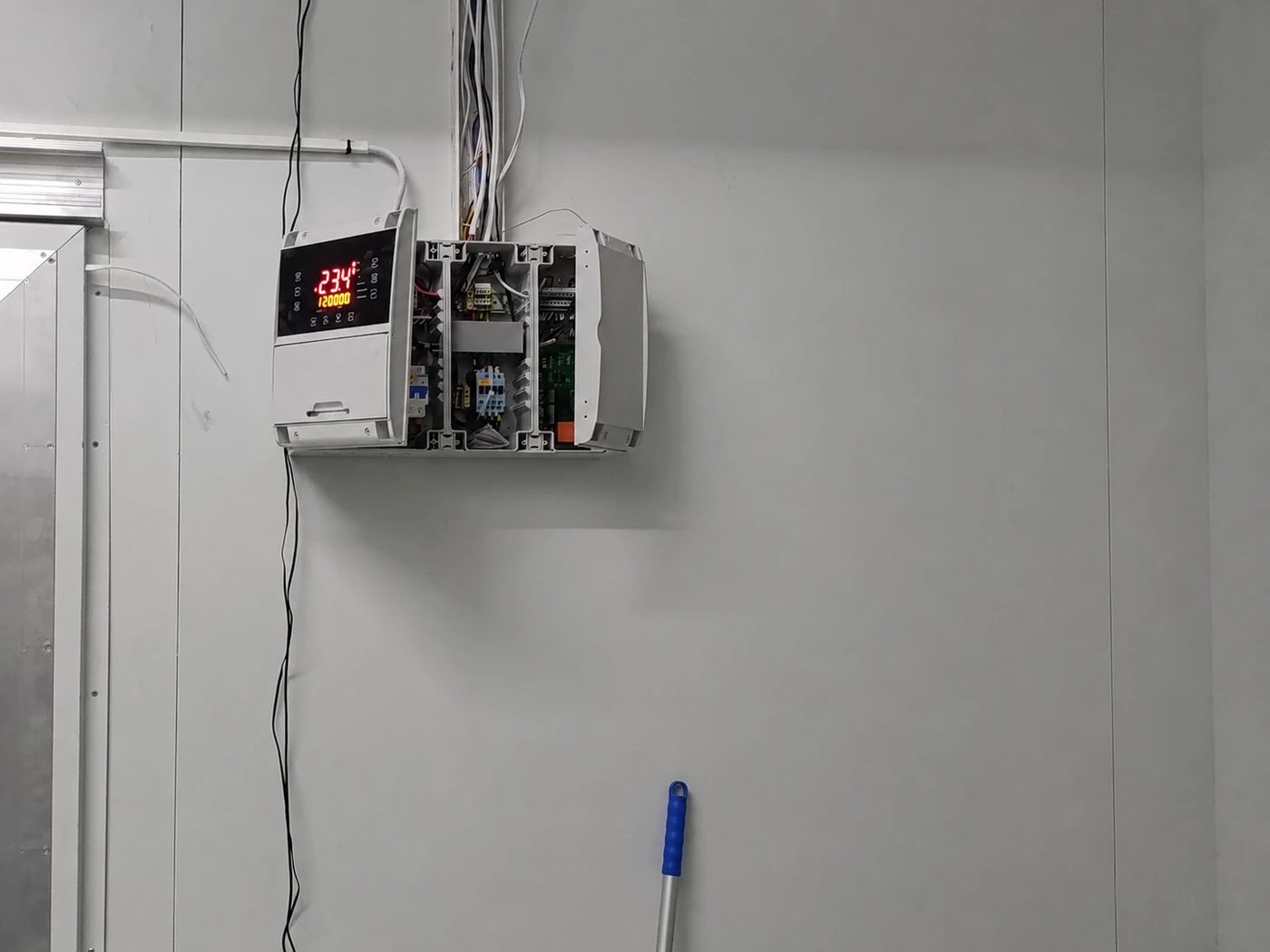
- Upgrading the electrical control box
- Changing the refrigerant and compatible components
- Installing more efficient fan motors
- Adding electronic controls
- Adding temperature monitoring
- Correcting undersized equipment
This may be appropriate where the insulated panels, door, floor and room dimensions remain suitable.
Cold room refurbishment
Refurbishment restores or modifies the insulated enclosure while retaining some usable equipment.
Examples include:
- Replacing damaged wall or ceiling panels
- Installing a new insulated floor
- Replacing the cold room door
- Resealing panel joints
- Repairing flashings and trims
- Replacing corroded internal finishes
- Reconfiguring the room dimensions
- Relocating and rebuilding the enclosure
Refurbishment can also include refrigeration work where both the room structure and equipment need partial renewal.
Complete cold room replacement
Complete replacement normally involves removing most or all of the existing enclosure and refrigeration system and installing a newly designed room.
This may be justified where:
- Panels are extensively damaged
- Insulation is wet
- The floor has failed
- The room is too small
- The layout no longer supports operations
- The refrigeration equipment is obsolete
- Multiple systems require replacement
- Energy consumption is excessive
- Repairs have become frequent and costly
Quick Decision Guide
| Condition | Repair component | Upgrade system | Refurbish room | Replace complete room |
|---|---|---|---|---|
| One failed fan or controller | ✓ | |||
| One accessible refrigerant leak | ✓ | |||
| Compressor failed but room is sound | ✓ | |||
| Refrigeration plant is undersized | ✓ | Possibly | ||
| Door or a few panels are damaged | ✓ | |||
| Floor insulation is inadequate | ✓ | Possibly | ||
| Extensive wet or rusted panels | Possibly | ✓ | ||
| Room is too small for current stock | Possibly | Possibly | ✓ | |
| Several major components are obsolete | Possibly | ✓ | ||
| Repeated major failures | Possibly | Possibly | ✓ | |
| Repair cost is close to replacement | ✓ |
This table is a starting point. A technical and commercial assessment is still required.
1. Electricity Bills Are Increasing
An unexplained increase in electricity consumption can indicate that the cold room is taking longer to remove the same amount of heat.
Possible causes include:
- Dirty condenser
- Damaged door gasket
- Evaporator icing
- Failed fan motor
- Refrigerant undercharge
- Excessive defrost
- Incorrect controller settings
- Wet insulation
- Open panel joints
- Compressor wear
- Increased product load
- Lower room setpoint
- Higher ambient temperature
A higher electricity bill does not automatically mean the room needs replacement. The first step is to establish whether actual kilowatt-hour consumption has increased or whether the tariff, demand charge or billing period has changed.
When repair may be sufficient
Repair may be appropriate where the increase can be traced to:
- Dirty coils
- Damaged door seals
- Incorrect controls
- Fan problems
- Refrigerant leakage
- Poor condenser ventilation
When an upgrade may be justified
A refrigeration upgrade may make sense where:
- The existing plant is inefficient
- The system runs almost continuously
- Equipment was incorrectly sized
- The compressor has lost capacity
- Controls are outdated
- The condenser is too small
- Old fan motors use excessive electricity
When replacement should be considered
Complete replacement becomes more relevant where rising consumption is caused by a combination of:
- Poor insulation
- Old refrigeration equipment
- Air leakage
- Inadequate flooring
- Damaged doors
- An unsuitable room layout
Replacing only the condensing unit may produce limited improvement if heat is continually entering through wet panels and damaged joints.
2. The System Has Frequent Refrigerant Leaks
A refrigeration system should not require regular regassing.
Refrigerant circulates within a sealed system and is not normally consumed during operation. If the charge repeatedly becomes low, the underlying leak has not been properly corrected or further leaks are developing.
Common leak locations include:
- Evaporator coils
- Condenser coils
- Copper pipework
- Brazed joints
- Service valves
- Schrader valves
- Vibration points
- Corroded tubing
- Pressure controls
- Receiver connections
Copeland recommends checking the full refrigeration system when one leak is found because additional leak points may also be present. Its guidance also highlights ageing copper lines, insulation and mounting hardware as areas requiring periodic attention.
Repair may be appropriate where:
- The leak is isolated and accessible.
- The remaining pipework is in good condition.
- The evaporator and condenser are not extensively corroded.
- The refrigerant remains practical to source.
- The compressor has not been damaged by prolonged low-charge operation.
Component replacement may be better where:
- The evaporator has several leaks.
- The condenser tubing is extensively corroded.
- Copper pipework has been patched repeatedly.
- Repairing one section is unlikely to restore long-term reliability.
In these cases, replacing the leaking coil or pipe run may be more dependable than continuing to repair individual holes.
Complete system replacement may be justified where:
- Both evaporator and condenser are deteriorating.
- The compressor has suffered repeated overheating.
- The refrigerant is no longer commercially practical.
- Replacement components are difficult to source.
- Leak-repair costs continue accumulating.
Copeland identifies low suction pressure, high condensing pressure and high compression ratios as major causes of compressor overheating, which can break down the lubricating oil and contribute to further damage.
3. The Cold Room Has Repeated Compressor Failures
A compressor is a major component, but its failure does not automatically mean the entire cold room must be replaced.
The more important question is: Why did it fail?
Possible underlying causes include:
- Dirty condenser
- Failed condenser fan
- Refrigerant leak
- Refrigerant overcharge
- Liquid floodback
- Liquid slugging
- Excessive discharge temperature
- Oil return problems
- Electrical phase loss
- Voltage imbalance
- Incorrect compressor selection
- Undersized condenser
- Incorrect expansion-valve operation
- System contamination
- Poor pipework design
Copeland’s troubleshooting material emphasises that compressor symptoms must be evaluated through the complete refrigeration cycle rather than assuming that the compressor itself is the only problem.
Signs that a compressor may be failing
Possible warning signs include:
- Unusual knocking or grinding
- Repeated overload trips
- Excessive shell temperature
- High electrical current
- Difficulty starting
- Circuit breaker tripping
- Reduced pressure difference
- Long runtime with poor cooling
- Compressor short cycling
- Burnt electrical smell
- Oil discolouration
- Loss of pumping capacity
These signs are not conclusive on their own. A technician should test the electrical supply, refrigerant pressures, temperatures, current draw and system controls.
Replace the compressor when:
- The compressor is confirmed mechanically or electrically defective.
- The remaining system is correctly sized.
- Coils and pipework are sound.
- The refrigerant remains suitable.
- The cause of failure can be corrected.
- The insulated room is in good condition.
Upgrade the full refrigeration system when:
- The replacement compressor is not compatible with ageing components.
- The evaporator and condenser are undersized.
- The system uses obsolete controls.
- The refrigeration capacity no longer suits the product load.
- Several major components are near the end of their service life.
Replace the complete cold room when:
- The refrigeration system and insulated enclosure are both failing.
- The room no longer suits the required temperature.
- Repeated compressor failures are caused by a fundamentally unsuitable design.
- The room is too small, poorly located or structurally damaged.
A new compressor should not be installed without correcting the operating condition that damaged the previous one.
4. Insulated Panels Are Rusted, Damaged or Separating
Cold room panels form the thermal and hygienic enclosure.
Minor surface damage may be repairable, but extensive corrosion, delamination or wet insulation can significantly reduce room performance.
Inspect for:
- Rust around joints
- Holes in the metal facing
- Loose panel skins
- Swollen areas
- Soft spots
- Open seams
- Damaged corners
- Mould
- Water stains
- Ice inside joints
- Panels moving under light pressure
Local panel repair may be possible where:
- Damage is limited to a small surface area.
- The insulation remains dry.
- The metal facing can be hygienically repaired.
- Panel joints remain aligned.
- There is no structural movement.
Panel replacement may be required where:
- The facing has separated from the insulation.
- Water has entered the core.
- Corrosion extends through the metal skin.
- Panel joints cannot be resealed reliably.
- The ceiling is sagging.
- The wall no longer supports door hardware correctly.
Full enclosure replacement may be better where:
- Damage affects several walls and the ceiling.
- Panel thickness is unsuitable for the operating temperature.
- The insulation core has deteriorated widely.
- Structural supports are corroded.
- The old room cannot be modified economically.
Replacing one badly damaged wall can sometimes extend the life of a room. Replacing several walls, the ceiling, floor and door may approach the cost of a new enclosure and should be compared carefully.
5. Persistent Condensation Appears on Panels or Around the Room
Condensation forms when warm, moisture-containing air reaches a surface below its dew-point temperature.
Possible causes include:
- Damaged door gasket
- Open panel joints
- Insufficient insulation
- Wet insulation
- Thermal bridging
- Unsealed pipe penetrations
- Poor vapour control
- Excessive surrounding humidity
- Cold transfer through an uninsulated floor
- Incorrect room temperature
- Failed door-frame heater
Condensation does not always mean full replacement
An isolated condensation problem may be corrected by:
- Replacing a door seal
- Aligning the door
- Resealing panel joints
- Insulating exposed pipes
- Repairing a vapour barrier
- Correcting the controller setpoint
- Improving external ventilation
Refurbishment may be needed where:
- Several joints are leaking.
- Panel edges are corroding.
- Moisture has entered the insulation.
- The floor-to-wall junction has failed.
- The room was assembled without an adequate vapour seal.
Replacement may be appropriate where:
- The entire enclosure sweats.
- Panel thickness is clearly inadequate.
- Wet insulation is widespread.
- Condensation is causing structural or hygiene damage.
- Previous resealing has repeatedly failed.
Persistent condensation should not be treated only as a cleaning problem. It can be evidence of a failing thermal envelope.
6. Ice Forms Around Doors, Floors or Panel Joints
Ice outside the evaporator indicates that moisture is entering or becoming trapped where it should not.
Common locations include:
- Door frame
- Door threshold
- Floor near the entrance
- Panel joints
- Ceiling joints
- Pipe penetrations
- Drain lines
Possible causes include:
- Damaged gasket
- Door misalignment
- Failed door-frame heater
- Pressure-relief fault
- Drain heater failure
- Open panel seams
- Door left open
- Excessive humidity
- Inadequate vapour sealing
- Wet insulation
Repair may involve:
- Replacing gaskets
- Repairing hinges or rollers
- Replacing door heaters
- Repairing pressure relief
- Resealing joints
- Repairing drain heaters
- Correcting staff door-use practices
Refurbishment may be needed where:
- Ice repeatedly forms inside panel joints.
- The door frame is corroded or distorted.
- The floor insulation has failed.
- Moisture has migrated behind several panels.
Ice formation is particularly serious in freezer rooms because repeated freezing and thawing can worsen panel separation, floor damage and door misalignment.
7. Room Temperatures Are Uneven
A cold room should maintain suitable conditions throughout the loaded storage area—not only near the temperature sensor.
Uneven temperatures may result from:
- Failed evaporator fans
- Ice on the evaporator
- Stock blocking airflow
- Poor shelving layout
- Incorrect evaporator position
- Undersized evaporator
- Overloaded room
- Air leakage
- Damaged insulation
- Sensor installed in an unrepresentative position
- Refrigeration equipment with insufficient capacity
Repair may be sufficient where:
- One fan has failed.
- The evaporator is iced because of a defrost fault.
- The temperature probe is defective.
- Stock is blocking the air return.
- A door seal is leaking.
An equipment upgrade may be required where:
- The evaporator is too small.
- Air throw cannot reach the full room.
- The room was enlarged without upgrading refrigeration.
- The product load has increased.
- The existing unit cannot recover after deliveries.
Enclosure modification may be needed where:
- The room has irregular internal sections.
- Shelving and door positions prevent circulation.
- A partition is creating dead areas.
- The evaporator location cannot provide proper airflow.
A room that has never maintained uniform temperatures may have a design problem rather than an isolated repair fault.
8. The Refrigerant or Replacement Components Are Becoming Obsolete
An old cold room may continue running but become increasingly difficult to maintain because of its refrigerant, compressor model, controls or electrical components.
Danfoss advises that an ageing cold room may be suitable for retrofit where the structure and major components remain serviceable and a compatible lower-global-warming-potential refrigerant path exists. Replacement may be more appropriate where the system is inefficient, difficult to service, incompatible with future refrigerants or unable to meet current performance expectations.
Retrofitting means modifying an existing refrigeration system to use a different refrigerant. It may require changes to valves, controls, oil, seals, pressure settings or other components.
A refrigerant retrofit may be practical where:
- The compressor is approved for the alternative refrigerant.
- The evaporator and condenser have adequate capacity.
- The expansion valve can be adjusted or replaced.
- Pressure controls are suitable.
- Pipework is in good condition.
- The expected discharge temperature remains acceptable.
For some existing R404A systems, alternatives such as R448A or R449A may be evaluated, but Danfoss cautions that compressor approval, valve settings, component sizing, controls and operating temperatures must all be checked.
A refrigeration-system replacement may be better where:
- The compressor is not approved for practical alternatives.
- Several components need modification.
- Efficiency would remain poor after retrofit.
- Replacement parts are unavailable.
- The system has repeated leak or compressor problems.
- The equipment no longer meets the room load.
The refrigerant decision should be made by a refrigeration specialist who can account for compatibility, safety classification and applicable requirements. Current cold-room options may include lower-GWP A1 blends, A2L refrigerants, CO₂ or hydrocarbons in suitable applications, each with different design and safety considerations.
9. Repair Costs Are Approaching Replacement Cost
A single repair may cost substantially less than replacement. The calculation changes when major repairs occur repeatedly.
Consider the combined cost of:
- Emergency call-outs
- Lost product
- Refrigerant replacement
- Compressor replacement
- Fan and controller failures
- Panel repairs
- Door repairs
- Electricity waste
- Business downtime
- Temporary refrigerated storage
- Staff disruption
The correct comparison is not simply:
Cost of today’s repair versus cost of a new cold room
A more useful comparison is:
Expected repair, downtime and energy costs over the next several years versus the cost and operating benefit of replacement
Repair may still be sensible where:
- The failure is isolated.
- The cold room generally performs well.
- Replacement parts remain available.
- The enclosure is sound.
- The room still suits the business.
- The repair has a reasonable warranty.
Replacement becomes more attractive where:
- Several major components are near end of life.
- Downtime threatens business operations.
- Energy consumption is high.
- Refrigerant and parts are difficult to source.
- Repairs have already exceeded the equipment’s remaining value.
- The room is too small or unsuitable.
- A new installation would materially improve reliability.
There is no universal percentage at which replacement becomes mandatory. The decision should consider the age, condition, strategic importance and expected remaining life of the complete system.
Which Part of the Cold Room Should Be Replaced?
Replace one component when the fault is isolated
Typical component repairs include:
- Fan motor
- Controller
- Temperature probe
- Contactor
- Pressure switch
- Solenoid valve
- Door gasket
- Defrost heater
- Drain heater
- Refrigerant valve
- Lighting
- Small section of pipework
This approach preserves the rest of the room and is normally the lowest-cost intervention.
Replace the compressor when the remaining system is healthy
A compressor replacement can be appropriate where:
- The cause of failure is understood.
- Condenser and evaporator capacity remain suitable.
- The refrigerant remains practical.
- Pipework is clean and sound.
- Electrical supply is correct.
- The room enclosure is in good condition.
The work should include appropriate investigation of contamination, oil condition and the failure cause.
Replace the condensing unit when several outdoor components are ageing
A complete condensing-unit replacement may be more practical than replacing the compressor alone where the existing unit also has:
- Corroded condenser coil
- Failed fan motors
- Old receiver
- Damaged electrical box
- Poorly available controls
- Structural corrosion
- Inadequate capacity
A packaged replacement can provide a more coordinated result and may include a new compressor, condenser, fans, receiver and controls.
Replace the evaporator when the indoor coil is leaking or unsuitable
Evaporator replacement may be appropriate where:
- The coil has repeated leaks.
- The unit is severely corroded.
- Fan motors are obsolete.
- Defrost heaters are unreliable.
- The existing unit is undersized.
- Air distribution is poor.
- The drain pan is damaged.
Refurbish the insulated panels when damage is localised
Panel refurbishment may include:
- Replacing selected panels
- Installing new trims
- Resealing joints
- Repairing penetrations
- Replacing the door
- Installing a new insulated floor
- Correcting ceiling supports
Replace the complete room when the design is no longer suitable
Complete replacement may provide the better long-term result where:
- The enclosure and refrigeration equipment both need major work.
- Internal dimensions no longer meet storage needs.
- The room cannot support required shelving or pallets.
- The operating temperature has changed.
- The room needs to become a freezer.
- The layout creates unsafe or inefficient workflows.
- The current site position causes ongoing condenser or access problems.
When a Refrigeration Upgrade Makes More Sense Than Full Replacement
Retaining the insulated room can reduce project cost and disruption where the panels remain sound.
A refrigeration upgrade may involve:
- New condensing unit
- New evaporator
- New pipework
- New electrical control box
- Modern temperature controller
- Compatible refrigerant
- New defrost controls
- New monitoring system
This option is often appropriate where:
- The room dimensions remain suitable.
- Panels and floor remain dry.
- Door and joints seal correctly.
- The current equipment is old or undersized.
- Replacement technology can be installed without compromising the enclosure.
The existing room should still be inspected for thermal leakage before equipment is sized. Installing new refrigeration equipment onto a damaged enclosure can result in excessive runtime and poor energy performance.
When Panel Refurbishment Makes More Sense
Refurbishment can extend the room’s life where the refrigeration equipment remains reliable but the enclosure has local damage.
Possible projects include:
- Replacing a corroded cold room floor
- Installing an insulated floor above an unsuitable slab
- Replacing a leaking or damaged door
- Replacing one wall affected by impact damage
- Repairing joints
- Adding protective finishes
- Relocating and rebuilding reusable panels
Panels should be assessed individually. A panel may appear acceptable externally while its insulation is wet or separated internally.
When Complete Replacement Is Usually the Better Decision
Full replacement becomes more compelling when several of the following conditions occur together:
- Room is too small.
- Layout is unsuitable.
- Panels are wet or heavily corroded.
- Floor has failed.
- Door cannot seal reliably.
- Refrigeration equipment is inefficient.
- Refrigerant is impractical.
- Major components are obsolete.
- Compressor has failed repeatedly.
- Electricity consumption is excessive.
- Temperature remains unstable.
- Repair history is extensive.
- Downtime is becoming unacceptable.
Replacing the full room allows the business to redesign:
- Internal dimensions
- Panel thickness
- Floor construction
- Door size and position
- Shelving layout
- Evaporator airflow
- Condensing-unit position
- Refrigeration capacity
- Controls
- Monitoring
- Electrical supply
Glotech Group’s cold room installation service covers purpose-designed enclosures and refrigeration systems for commercial chilled storage rather than applying one standard room specification to every application.
A Practical Repair-or-Replace Assessment
A professional assessment should review four areas.
1. Refrigeration equipment
Inspect:
- Compressor condition
- Condenser coil
- Condenser fans
- Evaporator coil
- Evaporator fans
- Refrigerant charge
- Pipework
- Expansion device
- Defrost system
- Electrical controls
- Operating pressures and temperatures
2. Insulated enclosure
Inspect:
- Panel thickness
- Panel core
- Surface corrosion
- Joint sealing
- Moisture damage
- Ceiling condition
- Floor insulation
- Door condition
- Vapour control
- Service penetrations
3. Current business requirements
Confirm:
- Product type
- Required temperature
- Product entry temperature
- Daily load
- Maximum stockholding
- Delivery frequency
- Door usage
- Future growth
- Required reliability
4. Financial impact
Estimate:
- Immediate repair cost
- Further likely repairs
- Electricity consumption
- Cost of downtime
- Product-loss risk
- Remaining equipment life
- Replacement cost
- Expected improvement from replacement
A written assessment is particularly valuable where the business must justify capital expenditure internally or to an insurer.
Questions to Ask Before Approving Another Repair
- What caused the fault?
- Has the same component failed before?
- Are other major components near the end of life?
- Is the refrigerant still practical?
- Are replacement parts readily available?
- Is the room correctly sized?
- Is the refrigeration plant correctly sized?
- Are the panels and floor still dry?
- Is the door sealing correctly?
- Will the repair improve reliability or only restore temporary operation?
- What warranty applies?
- What is the likely next major failure?
- What would a system upgrade cost?
- What would complete replacement cost?
- How much downtime would each option require?
Information to Give the Contractor
Provide:
- Room dimensions
- Product being stored
- Required temperature
- Maximum stock
- Product entry temperature
- Equipment model numbers
- Refrigerant type
- Installation age
- Repair history
- Previous compressor replacements
- Refrigerant additions
- Electricity-consumption records
- Temperature logs
- Photographs of damaged panels
- Details of condensation or ice
- Planned business growth
This information helps distinguish an isolated failure from a room that no longer meets its purpose.
Common Repair-or-Replace Mistakes
Replacing the compressor without finding the cause
The new compressor may fail for the same reason.
Regassing repeatedly
Refrigerant loss indicates leakage that should be repaired.
Installing larger equipment onto damaged panels
The larger system may consume more electricity without correcting heat infiltration.
Replacing panels without checking the refrigeration load
The existing refrigeration plant may already be unsuitable for current operations.
Choosing replacement only because the room is old
A well-maintained older enclosure may remain usable after an equipment upgrade.
Repairing indefinitely because replacement costs more today
Repeated repairs, energy waste and downtime may cost more over the next few years.
Converting a cold room into a freezer without rebuilding the enclosure
A freezer normally needs stronger insulation, floor treatment, vapour control, suitable doors and active defrost.
Ignoring changes in business use
A room designed for pre-chilled beverages may not suit large daily loads of warm food products.
Frequently Asked Questions
How do I know whether to repair or replace a cold room?
Consider the extent of the fault, repair history, panel condition, energy use, refrigerant availability, current storage requirements and the expected cost of future failures.
Does a failed compressor mean the whole cold room needs replacement?
No. A compressor can be replaced where the remaining refrigeration system and insulated enclosure are suitable. The cause of failure must first be identified and corrected.
What are the signs that a cold room compressor is failing?
Possible signs include unusual noise, high temperature, repeated overload trips, high electrical current, poor pumping capacity, long runtime and difficulty starting. These symptoms require professional testing.
Can old cold room panels be repaired?
Local surface or joint damage may be repairable. Panels with wet insulation, serious corrosion, delamination or structural damage normally require replacement.
Can I replace only the refrigeration unit?
Yes, where the room dimensions, panels, floor, door and insulation remain suitable for the required temperature and product load.
What is included in a cold room refurbishment?
Refurbishment may include new panels, floor insulation, doors, sealants, trims, refrigeration equipment, controls, electrical work and changes to the room layout.
Why does a cold room keep leaking refrigerant?
Repeated leaks may result from corroded coils, vibration, damaged pipework, poor joints or ageing components. The full system should be leak-tested rather than repeatedly topped up.
Is an old refrigerant a reason to replace the system?
Not automatically. Some systems can be retrofitted with a compatible alternative. Others require major component changes, making replacement more practical.
Is condensation a sign that panels need replacing?
It may result from damaged seals, thermal bridges or open joints that can be repaired. Widespread condensation, wet insulation and recurring joint failure may justify panel refurbishment or replacement.
Why is ice forming around the cold room door?
Possible causes include a damaged gasket, door misalignment, heater failure, pressure-relief fault or frequent door openings.
When does a cold room upgrade make sense?
An upgrade is appropriate where the enclosure remains usable but the refrigeration equipment, controls, monitoring or electrical system no longer provides suitable reliability or efficiency.
Is full replacement more energy efficient?
A correctly designed new room can reduce energy consumption through improved insulation, sealing, controls and equipment efficiency. Actual savings depend on the condition and use of the existing room.
Make the Decision Based on the Complete Cold Room
A cold room should not be replaced because one fan, controller or compressor has failed.
Similarly, major money should not be invested in repairing refrigeration equipment where the room has wet panels, poor flooring, an unsuitable layout and repeated temperature problems.
Use the following approach:
- Repair one component when the fault is isolated.
- Upgrade the refrigeration system when the enclosure remains suitable but the equipment is old, inefficient or undersized.
- Refurbish the room when the panels, floor or door require targeted structural work.
- Replace the complete cold room when multiple systems are deteriorating or the installation no longer meets the business’s requirements.
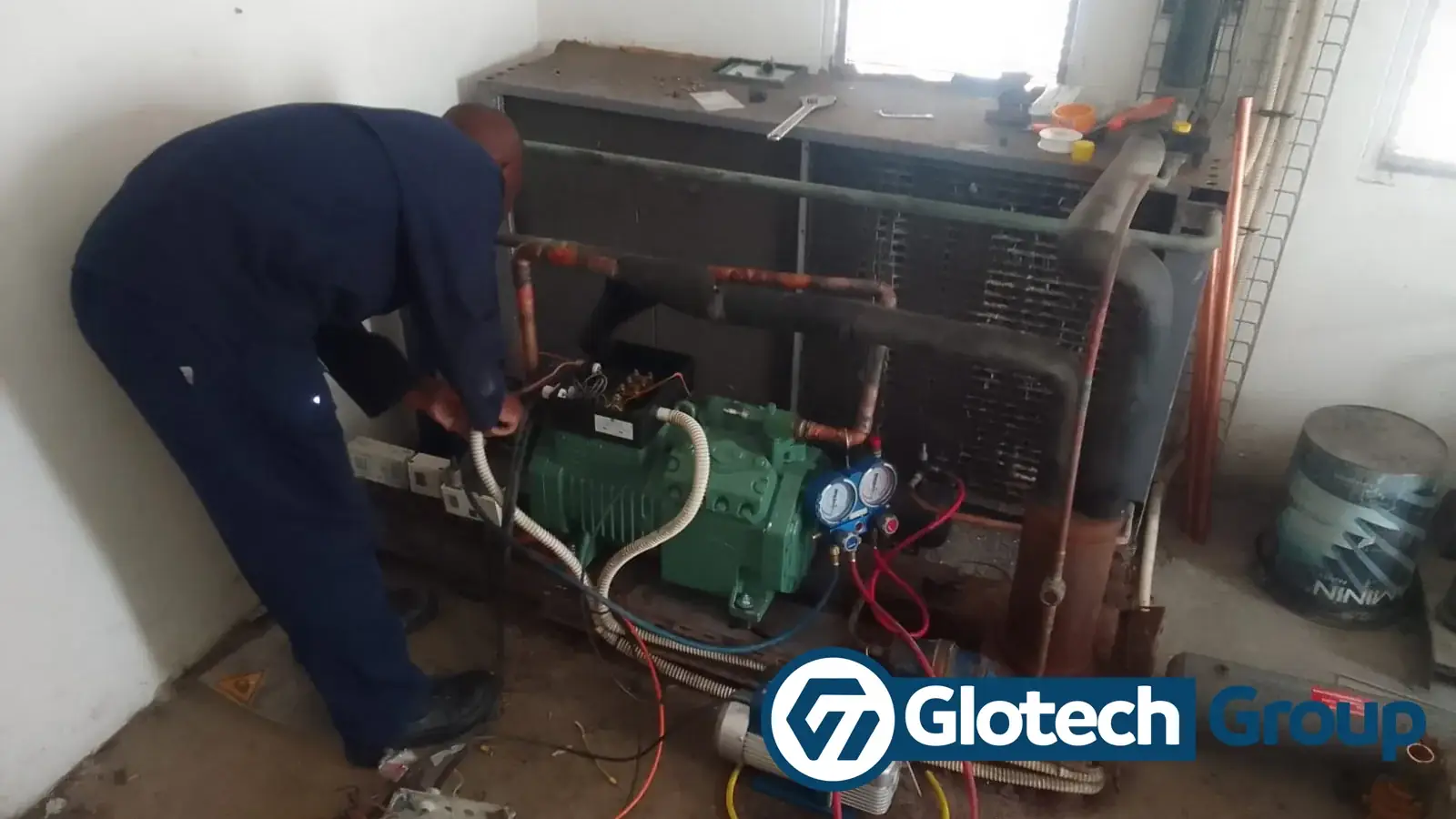
Glotech Group provides fault diagnosis, refrigerant-leak repairs, compressor replacement, door repairs and commercial cold room maintenance. Visit the commercial cold-room repairs page to arrange an inspection of an existing room.
Where refurbishment is no longer commercially practical, Glotech Group can design a replacement around the required dimensions, product load, storage temperature and site conditions. Learn more about cold room installation in the Western Cape.