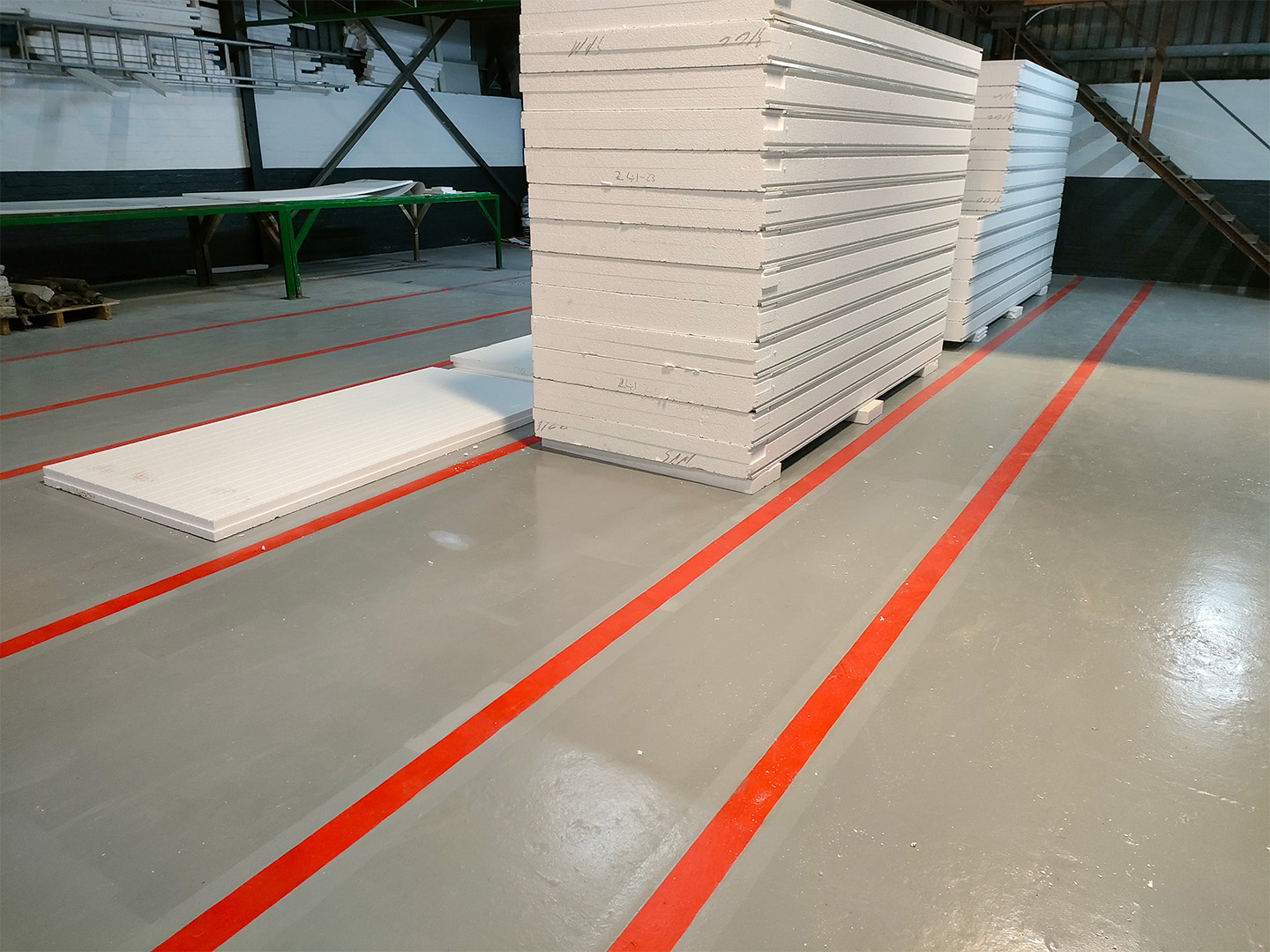
The insulation core is one of the most important specifications when selecting panels for a cold room, freezer room or temperature-controlled workspace.
Two of the most common options are:
- Polyurethane, commonly abbreviated as PU or PUR
- Expanded polystyrene, commonly abbreviated as EPS
Polyisocyanurate, or PIR, is another rigid foam insulation used in sandwich panels. It is chemically related to polyurethane but is formulated differently, particularly in relation to its behaviour when exposed to heat and fire.
PU, PIR and EPS panels can all be used successfully when they are correctly specified. However, they do not provide identical thermal performance, fire behaviour, moisture resistance, structural properties or purchase costs.
The most suitable panel depends on:
- Required room temperature
- Maximum ambient temperature
- Cold room or freezer application
- Available installation space
- Required panel thickness
- Fire and insurance requirements
- Moisture exposure
- Wall and ceiling spans
- Floor loading
- Hygiene requirements
- Initial construction budget
- Long-term electricity cost
The comparison should therefore be based on the complete tested panel system—not only the name of the insulation material.
Polyurethane vs Polystyrene Panels: Quick Comparison
| Feature | PU/PUR panels | PIR panels | EPS panels |
|---|---|---|---|
| Insulation material | Rigid polyurethane foam | Rigid polyisocyanurate foam | Expanded polystyrene beads |
| Thermal efficiency per millimetre | Generally high | Generally high | Generally lower than PU or PIR |
| Thickness required for similar thermal performance | Commonly thinner | Commonly thinner | Commonly thicker |
| Initial panel price | Usually higher than EPS | Often similar to or higher than PUR | Usually lower |
| Fire performance | Product-dependent | Commonly better than standard PUR, but still product-dependent | Product- and grade-dependent |
| Moisture resistance | Good when the closed-cell core and joints remain intact | Good when correctly manufactured and sealed | Generally moisture-resistant, but prolonged water entry through damaged joints can reduce performance |
| Weight | Lightweight | Lightweight | Very lightweight |
| Structural rigidity | Commonly high in bonded sandwich panels | Commonly high in bonded sandwich panels | Depends strongly on density, facing sheets and panel construction |
| Space efficiency | Good | Good | May require greater thickness |
| Common applications | Cold rooms, freezers, clean rooms and processing areas | Cold rooms, freezers and projects with demanding thermal or fire specifications | Cold rooms, insulated buildings, processing rooms and cost-sensitive projects |
| Main advantage | Strong thermal performance at reduced thickness | Strong thermal performance with potentially improved fire behaviour | Lower purchase cost and broad availability |
| Main limitation | Higher initial price than EPS | Higher cost and specification complexity | Greater thickness may be needed for equivalent insulation |
These are broad comparisons. The declared U-value, fire classification, density, facings, joints and certifications of the actual panel should determine the final selection.
What Is an Insulated Sandwich Panel?
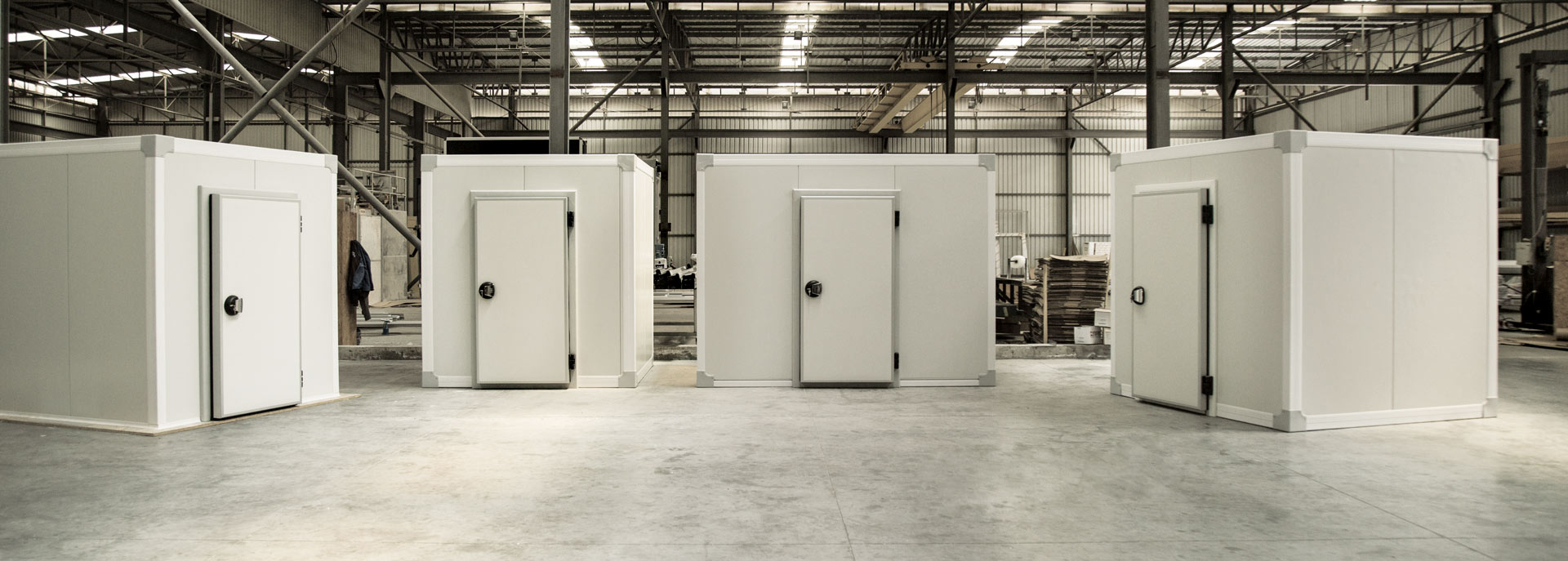
An insulated sandwich panel consists of an insulation core bonded between two facing sheets.
The facings are commonly made from:
- Pre-painted galvanised steel
- Coated steel
- Stainless steel
- Aluminium
- Glass-reinforced plastic in selected hygienic applications
The bonded construction allows the facings and core to work together as a lightweight panel.
A complete cold-room panel system also includes:
- Interlocking joints
- Cam locks or concealed fixings where specified
- Sealants
- Internal and external corner trims
- Floor and ceiling connections
- Door frames
- Service penetrations
- Vapour-control details
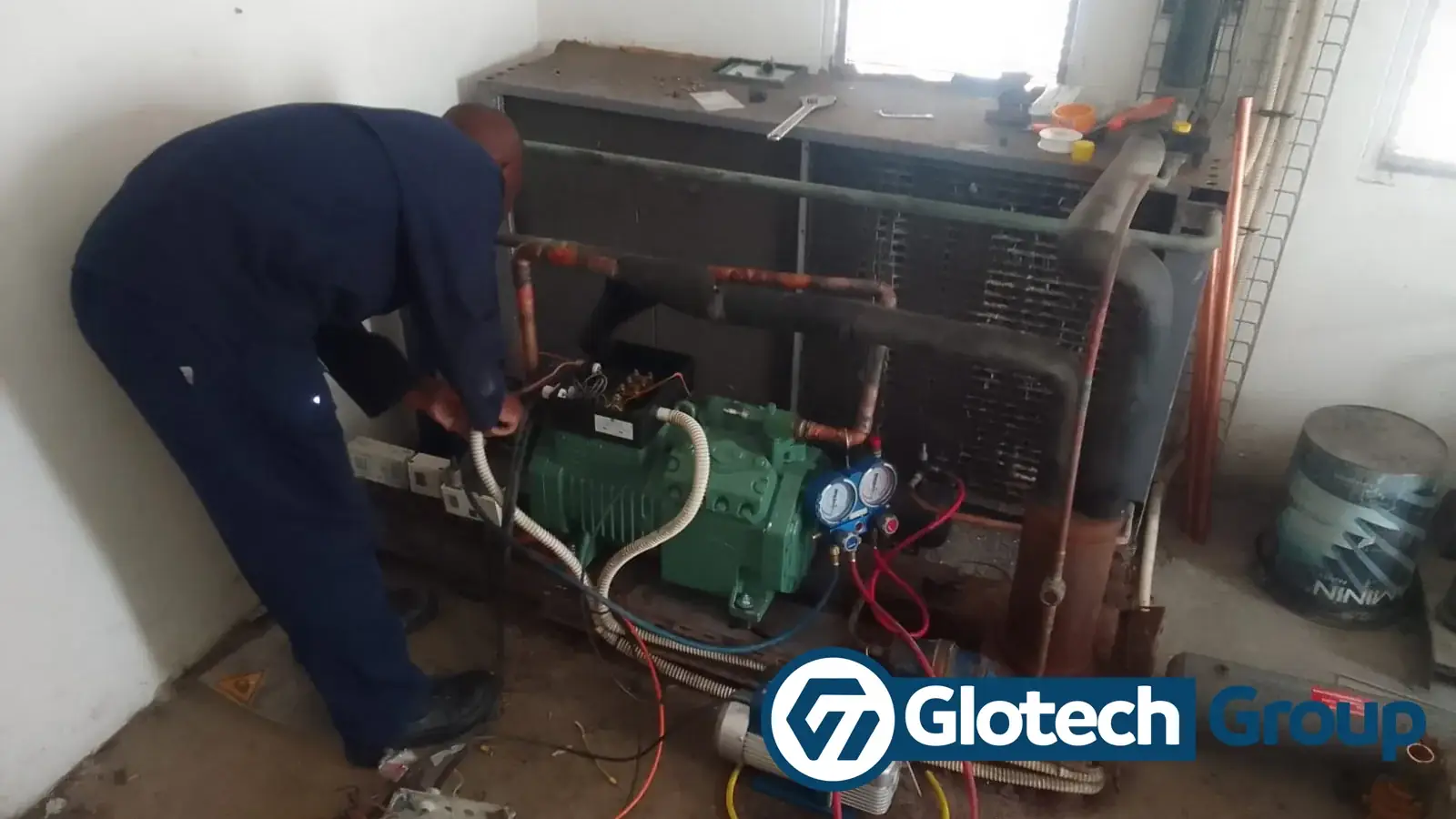
A high-performance insulation core cannot compensate for poorly aligned panels, open joints or unsealed penetrations. Warm-air leakage increases refrigeration demand and can introduce moisture into the enclosure. Glotech Group identifies weak joints, poor panel alignment and low-quality installation as common causes of air leakage and energy loss in cold-storage rooms.
What Are Polyurethane Panels?
Polyurethane cold-room panels contain a rigid polyurethane foam core bonded between metal or other suitable facings.
The abbreviation PU is commonly used as a general description. PUR is a more specific abbreviation for polyurethane foam and is often used when comparing PUR with PIR.
Rigid polyurethane foam generally has a closed-cell structure. The cells contain low-conductivity gas, helping the core resist heat transfer.
Polyurethane panels are commonly used for:
- Commercial cold rooms
- Walk-in refrigerators
- Freezer rooms
- Food-production areas
- Meat-processing facilities
- Dairy facilities
- Clean rooms
- Temperature-controlled partitions
- Refrigerated warehouses
- Mobile cold rooms
Their main advantage is strong insulation performance at a relatively low panel thickness.
What Are Polystyrene Panels?
Polystyrene cold-room panels normally use an expanded-polystyrene core.
EPS is manufactured by expanding small polystyrene beads and moulding them into insulation blocks or boards. The core is then bonded between panel facings.
EPS panels are commonly used for:
- Positive-temperature cold rooms
- Selected freezer rooms
- Food-processing partitions
- Insulated ceilings
- Modular buildings
- Cleanable workspaces
- Agricultural storage
- Temperature-controlled production areas
EPS is lightweight and often has a lower initial purchase price than an equivalent PU or PIR panel system.
South African suppliers offer EPS cold-room panels in a wide range of thicknesses, densities and lengths, allowing them to be specified for different thermal and structural requirements.
What Are PIR Sandwich Panels?
PIR stands for polyisocyanurate.
PIR foam is related to polyurethane, but it contains a greater proportion of isocyanate and forms a different chemical structure during manufacture.
In practical panel selection, PIR is often considered where a project requires:
- Strong thermal efficiency
- Reduced panel thickness
- Improved tested fire performance
- Low-temperature storage
- Large insulated buildings
- Insurance-approved panel systems
- Documented product certification
PIR should not automatically be described as fireproof. It is still an organic foam insulation, and its performance depends on the formulation, facings, joint system and tested panel assembly.
The correct comparison is between the fire classifications of complete certified panels—not between the generic words “PIR”, “PU” and “EPS”.
Thermal Efficiency
Thermal efficiency is usually the first factor considered when comparing polyurethane and polystyrene panels.
The insulation core’s thermal conductivity indicates how easily heat passes through the material. It is normally expressed as a lambda value in watts per metre-kelvin.
A lower lambda value generally indicates stronger insulation performance for the same thickness.
PU and PIR cores commonly provide lower thermal conductivity than EPS. This means that a thinner PU or PIR panel may achieve a similar U-value to a thicker EPS panel.
A South African refrigeration-industry comparison states that approximately 60mm of polyurethane can provide thermal performance comparable to 100mm of polystyrene in some panel systems. It also notes that approximately 100mm of polyurethane may replace approximately 150mm of polystyrene where the compared products have the assumed properties. These figures are examples rather than universal conversion rules.
Actual performance varies according to:
- Foam formulation
- Density
- Cell structure
- Manufacturing quality
- Panel age
- Moisture condition
- Joint design
- Metal facings
- Installation quality
The manufacturer’s declared thermal conductivity and U-value should always be requested.
Why the U-Value Matters
The U-value describes the rate of heat transfer through the complete panel assembly.
A lower U-value means less heat enters the cold room through each square metre of enclosure for a given temperature difference.
A simplified transmission-load calculation is:
Heat gain = panel area × U-value × temperature difference
Consider two rooms with 100m² of exposed panel area and a temperature difference of 40°C.
Panel system A
- U-value: 0.35 W/m²K
- Heat transfer: 100 × 0.35 × 40
- Result: 1,400 watts
Panel system B
- U-value: 0.22 W/m²K
- Heat transfer: 100 × 0.22 × 40
- Result: 880 watts
The second panel system allows substantially less heat to enter through the enclosure in this simplified example.
A complete refrigeration load calculation must also account for:
- Door openings
- Product temperature
- Product quantity
- People
- Lighting
- Evaporator fans
- Defrost
- Flooring
- Air leakage
- External weather conditions
The U-value does not determine the entire system capacity, but it is more useful than comparing panel thickness alone.
Required Panel Thickness
Because PU and PIR generally provide stronger insulation per millimetre, they can often be used at a reduced thickness compared with EPS.
This can be important where:
- The available room is narrow
- Shelf dimensions are fixed
- Pallet aisles are restricted
- The external footprint cannot change
- Door openings are already constructed
- Ceiling height is limited
Suppose an external building width permits a cold room measuring no more than 3 metres wide.
Changing from 150mm EPS panels to a 100mm PU system could, in a simplified wall-to-wall comparison, increase the internal width by approximately 100mm:
- 50mm saved on one wall
- 50mm saved on the opposite wall
That additional space may determine whether shelving, pallets or an access aisle fit properly.
EPS can still achieve the required thermal performance where sufficient thickness is used and the complete system is correctly designed.
Typical Cold-Room Applications
PU or PUR panels
PU panels are commonly selected for:
- Chilled cold rooms
- Meat and dairy storage
- Restaurant cold rooms
- Food-production facilities
- Rooms with limited internal space
- High-ambient installations
- Energy-sensitive projects
- Selected freezer rooms
PIR panels
PIR panels are commonly considered for:
- Commercial freezer rooms
- Low-temperature storage
- Large refrigerated warehouses
- Insurer-sensitive facilities
- Projects requiring documented fire testing
- Temperature-controlled manufacturing
- External cold-storage buildings
EPS panels
EPS panels are commonly considered for:
- Positive-temperature cold rooms
- Beverage rooms
- Produce storage
- Food-processing partitions
- Cost-sensitive installations
- Rooms where greater panel thickness can be accommodated
- Selected freezer rooms using the correct thickness and density
The correct choice depends on the tested product and design conditions—not only the application name.
Cold-Room Versus Freezer-Room Applications
A positive-temperature cold room commonly operates somewhere between approximately 0°C and +10°C, depending on the product.
A commercial freezer room commonly operates near −18°C or below.
Because the freezer maintains a greater temperature difference from the surroundings, it normally needs:
- A lower enclosure U-value
- Greater insulation thickness
- Stronger vapour control
- An insulated floor
- More carefully sealed joints
- A suitable freezer-rated door
- Low-temperature refrigeration equipment
- Active defrost
PU and PIR panels are often attractive for freezer rooms because they can provide high thermal resistance without extremely thick walls.
EPS can also be used in freezer construction when:
- The panel is sufficiently thick
- The density is appropriate
- The floor is correctly insulated
- The vapour barrier is continuous
- The joints are properly sealed
- The door and refrigeration system are freezer rated
It would therefore be inaccurate to say that EPS is only for cold rooms or that PU is always required for freezers.
Fire Performance
Fire performance requires careful comparison because no foam-core panel should be judged by the insulation name alone.
Important factors include:
- Core formulation
- Flame-retardant additives
- Core density
- Facing material
- Joint construction
- Exposed edges
- Fixing system
- Panel orientation
- Test method
- Fire classification
- Smoke production
- Installation details
EPS fire performance
Standard EPS is combustible. Fire-retardant grades can reduce flame spread under specified test conditions, but this does not make the material non-combustible.
Exposed EPS edges, damaged facings and poorly protected penetrations can increase risk.
PUR fire performance
PUR is also an organic combustible insulation. Its fire performance depends on the formulation and complete panel assembly.
A product described as “fire-retardant polyurethane” should still be supported by a recognised test report and classification.
PIR fire performance
PIR generally forms a more stable char layer when exposed to heat and is commonly able to achieve stronger fire classifications than conventional PUR formulations.
However, PIR is not automatically non-combustible or suitable for every fire-risk category.
The safest approach is to request:
- The exact fire classification
- The test standard used
- The name of the certified panel
- Installation limitations
- Joint and fixing requirements
- Insurer acceptance where relevant
Do not compare one supplier’s certified PIR panel with an untested generic EPS or PUR panel and assume that the difference applies to every product made from those materials.
Fire Safety and South African Projects
Panel selection for a South African commercial building may be influenced by:
- Building use
- Room size
- Occupancy
- Fire-compartment requirements
- Escape routes
- Stored-product risk
- Insurer requirements
- Municipal approval
- Fire-engineer recommendations
- Sprinkler or detection systems
Cold stores with high-value stock or large uninterrupted panel areas may receive greater scrutiny from insurers.
A lower-cost panel should not be approved until the client understands whether it satisfies the building, fire and insurance requirements applicable to the specific property.
Moisture Resistance
Cold-room panels operate in conditions where moisture movement is a constant concern.
Warm, humid air naturally moves toward the colder enclosure. If it reaches damaged insulation or open joints, it can condense or freeze.
PU and PIR
Rigid PU and PIR cores are predominantly closed-cell materials and generally resist water absorption when correctly manufactured.
Their performance can still be affected by:
- Cut or exposed edges
- Poorly sealed joints
- Damaged facings
- Unsealed service penetrations
- Delamination
- Water entering from an external roof leak
EPS
EPS also resists moisture and does not support mould growth as a food source. However, water can enter through gaps between beads, damaged edges or poorly protected panel joints.
Prolonged water intrusion can increase thermal conductivity and weaken the bond between the core and facings.
The practical moisture performance of either system therefore depends heavily on:
- Joint design
- Sealant compatibility
- Vapour barriers
- Flashings
- Floor junctions
- Door frames
- Roof waterproofing
- Installation quality
A badly sealed PU panel room may perform worse than a carefully installed EPS panel room.
Vapour Control
Vapour control is particularly important in freezer rooms.
Any interruption in the warm-side vapour barrier can allow moisture to migrate into the enclosure.
Common problem areas include:
- Wall-to-floor junctions
- Ceiling joints
- Corners
- Door openings
- Refrigeration pipes
- Electrical conduits
- Drain lines
- Structural supports
- Panel repairs
Possible results include:
- Ice inside joints
- Wet insulation
- External condensation
- Mould
- Corrosion
- Panel swelling
- Loss of thermal performance
- Increased compressor runtime
Core material alone does not prevent these failures. The full enclosure must be sealed as a continuous system.
Structural Strength
An insulated panel is a composite product. Its strength depends on the bonded interaction between the core and the facing sheets.
Important structural variables include:
- Core density
- Core shear strength
- Adhesion to the facings
- Facing-sheet thickness
- Steel grade
- Panel profile
- Panel thickness
- Span
- Support spacing
- Wind loads
- Ceiling loads
- Installation orientation
PU and PIR panels
Rigid PU and PIR cores commonly provide strong adhesion and shear resistance in properly manufactured sandwich panels.
This can support:
- Longer wall spans
- Improved panel stiffness
- Reduced deflection
- Stable ceiling construction
EPS panels
EPS panels can also provide suitable structural performance, but the result depends strongly on density and panel manufacture.
A low-density EPS panel with thin facings should not be compared directly with a higher-density EPS panel or a premium PU/PIR system.
The panel supplier’s span tables should be checked for:
- Wall height
- Ceiling span
- Wind exposure
- External installation
- Suspended loads
- Maintenance access
No cold-room panel ceiling should be walked on or used to suspend equipment unless the structure was specifically designed for that load.
Panel Density
Density is frequently mentioned in panel quotations, but it should not be interpreted in isolation.
For EPS, greater density can improve:
- Compressive strength
- Impact resistance
- Fastener performance
- Dimensional stability
- Load-bearing characteristics
For PU and PIR, density also influences mechanical and thermal properties.
However, higher density does not automatically mean that a panel is suitable. The complete product still needs:
- Correct adhesion
- Suitable facings
- Accurate dimensions
- Tested thermal properties
- Structural data
- Fire documentation
- Proper installation
A quotation describing only “high-density panels” is incomplete.
Hygiene and Cleaning
PU, PIR and EPS cores are normally enclosed behind smooth facings, so the hygienic performance of a finished panel is determined largely by:
- Surface coating
- Joint design
- Sealants
- Trims
- Resistance to corrosion
- Ease of cleaning
- Resistance to impact damage
- Food-contact suitability where required
Common hygienic facing options include:
- Food-safe coated steel
- Stainless steel
- Glass-reinforced plastic
- Corrosion-resistant coated metal
A smooth, properly sealed panel surface can help prevent:
- Dirt accumulation
- Mould at joints
- Pest entry
- Water penetration
- Contamination behind trims
The insulation core should not be exposed inside a food-storage or production room.
Purchase Price
EPS panels usually have the lower initial purchase price.
PU and PIR panels generally cost more because of:
- Raw-material cost
- Manufacturing process
- Higher thermal performance
- Product certification
- Fire testing
- More specialised applications
However, panel cost should not be compared per square metre without considering thickness and performance.
For example, a 100mm PU panel and a 100mm EPS panel may not provide the same U-value. A fair comparison may need to place a thinner PU panel against a thicker EPS panel that achieves a similar thermal result.
A complete cost comparison should include:
- Panel price
- Required thickness
- Transport
- Installation labour
- Door thickness
- Flashings and trims
- Structural supports
- Refrigeration capacity
- Electricity consumption
- Maintenance
- Expected operating life
- Value of internal floor space
Initial Cost Versus Operating Cost
A lower-cost EPS enclosure may be the best commercial choice where:
- The temperature requirement is moderate
- Sufficient wall thickness can be accommodated
- The room is indoors
- Door traffic is controlled
- The selected panel has suitable density and certification
- Energy consumption remains acceptable
PU or PIR may provide better lifetime value where:
- The room operates at freezer temperatures
- Ambient temperatures are high
- Electricity use is a major cost
- Internal space is limited
- The room operates continuously
- Long-term thermal performance is prioritised
- Refrigeration capacity must be minimised
The panel decision should therefore consider both capital expenditure and operating expenditure.
Effects on Refrigeration-System Size
Heat passing through the enclosure forms part of the refrigeration load.
A panel system with a lower U-value can reduce transmission heat gain and may allow:
- Lower compressor duty
- More stable room temperature
- Better performance during hot weather
- Reduced compressor runtime
- Lower electricity consumption
- Additional capacity for product loading
The refrigeration system must still be sized for all loads, including:
- Incoming product
- Door openings
- People
- Lighting
- Fans
- Defrost
- Air leakage
Better insulation cannot compensate for an undersized refrigeration system, and oversized refrigeration equipment cannot fully correct a leaking enclosure.
Environmental Considerations
The environmental comparison between EPS, PU and PIR is complex.
Factors include:
- Raw materials
- Blowing agents
- Manufacturing energy
- Panel lifespan
- Refrigeration electricity use
- Possibility of reusing panels
- Recycling infrastructure
- Separation of cores and facings
- Disposal methods
- Fire replacement risk
A panel with higher embodied impact may still reduce total lifetime energy consumption if it substantially lowers heat gain over many years.
Conversely, a thicker EPS system may provide a practical, durable solution where its thermal performance meets the design requirement.
Environmental claims should therefore be supported by:
- Environmental product declarations
- Manufacturer data
- Recycled-content information
- Expected service life
- End-of-life plans
Generic claims such as “eco-friendly” are not enough for a meaningful comparison.
Which Material Is Best for a Cold Room?
There is no single best panel for every cold room.
EPS may be the better option where:
- The initial budget is limited
- The room operates at a moderate chilled temperature
- Additional panel thickness can be accommodated
- A suitable fire-retardant grade is available
- The supplier provides adequate density and structural data
- The room is installed and sealed correctly
PU may be the better option where:
- High thermal performance is required
- Internal space is limited
- The room operates at a low temperature
- Reduced panel thickness is valuable
- Electricity consumption is a priority
- A high-quality certified system is available
PIR may be the better option where:
- Strong thermal performance is required
- The project has more demanding fire specifications
- The building insurer requires tested panel systems
- The room is a large freezer or cold-storage warehouse
- Documented product certification is important
The decision should be confirmed using actual manufacturer data.
Which Material Is Best for a Freezer Room?
PU and PIR are commonly selected for freezer rooms because they provide strong thermal resistance at manageable thicknesses.
EPS can also be used for a freezer room, but it may need:
- Greater thickness
- Suitable density
- Stronger structural specification
- Carefully sealed joints
- Continuous floor insulation
- Correct vapour control
A freezer-panel decision should also consider:
- Operating temperature
- Maximum ambient temperature
- Room size
- Direct sunlight
- Door-opening frequency
- Daily product load
- Required pull-down time
- Floor construction
- Defrost arrangement
It is not sufficient to specify “150mm freezer panels” without identifying the insulation core and U-value.
Common Comparison Mistakes
Assuming all polyurethane panels are PIR
PUR and PIR are related but different materials. Their tested fire and thermal properties should be identified separately.
Comparing equal thicknesses only
A 100mm EPS panel and a 100mm PU panel generally do not provide identical insulation.
Treating PIR as non-combustible
PIR can offer improved fire behaviour, but it remains an organic foam and must be assessed using the complete panel’s fire classification.
Choosing EPS only because it is cheaper
The thicker enclosure, refrigeration load and electricity consumption should also be considered.
Choosing PU without checking certification
A generic polyurethane panel may not provide the claimed performance if the density, formulation or manufacturing quality is poor.
Ignoring the facings
Thin, unsuitable or easily corroded facings can shorten the panel system’s life regardless of the core.
Ignoring panel joints
Air and moisture leakage can undermine any insulation material.
Using wall panels as loaded floors
Floor systems require suitable compressive strength and load distribution.
Comparing marketing claims instead of tested values
Ask for U-values, thermal conductivity, fire classifications, density and span tables.
What Should Be Included in a Panel Quotation?
A detailed quotation should specify:
- EPS, PUR or PIR core
- Panel thickness
- Core density
- Declared thermal conductivity
- Panel U-value
- Internal facing material
- External facing material
- Facing thickness
- Surface coating
- Fire classification
- Panel width and length
- Joint system
- Sealant method
- Wall supports
- Ceiling supports
- Floor construction
- Door specification
- Flashings and trims
- Installation labour
- Transport
- Warranty
- Exclusions
The intended operating temperature should also be recorded.
Questions to Ask a Panel Supplier
Before approving the system, ask:
- Is the core EPS, PUR or PIR?
- What is the core density?
- What is the declared thermal conductivity?
- What is the panel U-value?
- Is that value initial or aged?
- What fire test and classification apply?
- Is the certification for the complete panel?
- What thickness is recommended for the design temperature?
- What facing material and thickness are included?
- What coating is used?
- What spans are permitted?
- How are the joints sealed?
- Is the panel suitable for indoor or outdoor use?
- What floor loads can the proposed system carry?
- What warranty applies?
- Can replacement panels be sourced later?
Clear answers make it easier to compare proposals fairly.
Frequently Asked Questions
Is polyurethane better than polystyrene for cold rooms?
Polyurethane generally provides greater thermal resistance per millimetre, allowing thinner panels. Polystyrene can provide a suitable and economical cold-room enclosure where the correct density and thickness are used.
What is the difference between PU and EPS cold-room panels?
PU uses rigid polyurethane foam, while EPS uses expanded polystyrene. PU normally provides stronger insulation at a reduced thickness, while EPS normally has a lower initial purchase cost.
Is PIR the same as polyurethane?
PIR and PUR are related rigid foam materials, but they have different chemical structures. PIR commonly provides improved fire behaviour compared with conventional PUR formulations.
Is PIR fireproof?
No. PIR is not automatically non-combustible or fireproof. Its performance must be confirmed using the complete panel system’s test report and fire classification.
Can EPS panels be used for freezer rooms?
Yes, where the EPS density, thickness, joints, floor and vapour-control system are correctly designed for the freezer temperature.
Are PU panels waterproof?
The closed-cell core generally resists water absorption, but damaged facings, unsealed edges and open joints can still allow moisture into the panel.
Which panel is strongest?
Strength depends on the core density, bond, facing sheets, panel thickness and support spacing. PU and PIR commonly provide high rigidity, but a properly engineered EPS panel can also meet structural requirements.
Which panel is cheaper?
EPS panels are generally cheaper to purchase. PU and PIR panels normally cost more but may require less thickness and can reduce heat gain.
Which panel provides more internal space?
PU or PIR panels may provide more usable internal space because they can often meet a required U-value at a lower thickness than EPS.
What are the best panels for a cold room?
The best panels are those that meet the required temperature, thermal, structural, moisture, hygiene, fire and budget requirements. The decision should be based on certified panel data rather than the core material alone.
Choose the Panel System Around the Application
Polyurethane, PIR and polystyrene panels can all be used in cold-storage construction, but they offer different advantages.
EPS panels generally provide an economical solution and can perform well where the correct density and thickness are selected.
PU panels generally provide stronger insulation per millimetre, making them useful for cold rooms, freezers and projects with limited internal space.
PIR panels combine strong thermal performance with potentially improved tested fire behaviour, making them suitable for projects with more demanding fire, insurance or low-temperature requirements.
Before choosing a panel, compare:
- Required room temperature
- Ambient heat
- Core material
- Panel thickness
- U-value
- Fire classification
- Density
- Facing sheets
- Structural span
- Joint system
- Moisture control
- Purchase cost
- Expected energy consumption
Glotech Group installs EPS, polyurethane and PU/PIR sandwich-panel systems for cold rooms, freezer rooms and temperature-controlled commercial spaces. Learn more about insulated panel installation and the panel options available for different applications.